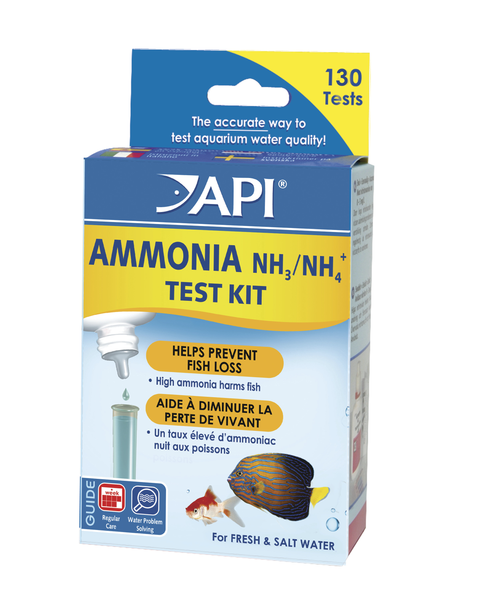
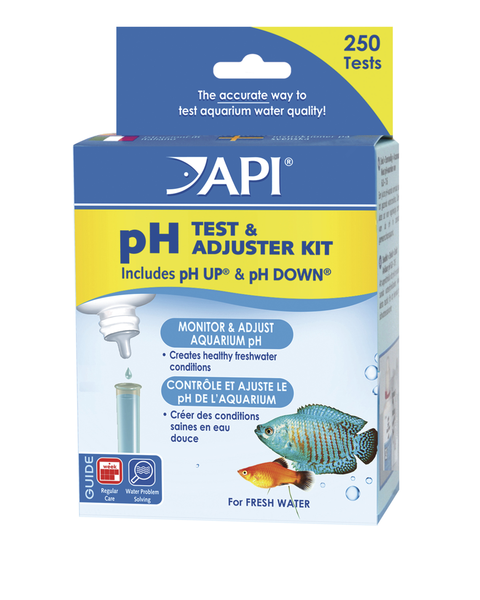
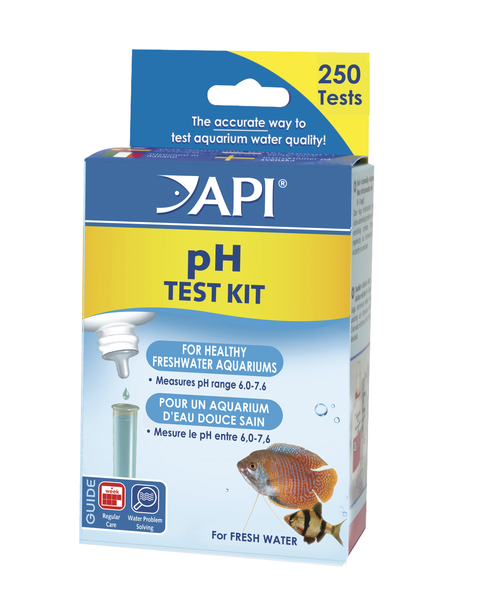
API Freshwater Master Multi Test Kit 5 in 1


Water type
Freshwater
API Freshwater Master Multi Test Kit 5 in 1
The one kit that answers "is my tank actually cycled?" — not just "what's my pH?" The API Freshwater Master Test Kit tests five parameters in one box: pH, high range pH, ammonia, nitrite and nitrate. It's a liquid titration and colour-match kit good for approximately 800 tests combined across all five, and it's the kit API themselves point new fishkeepers to for cycling a tank.
Key features
- Five parameters, one kit — pH, high range pH, ammonia, nitrite and nitrate, the full set you need to confirm a tank has cycled.
- About 800 tests combined — across all five parameters, from seven reagent bottles.
- Liquid reagents, not strips — API rates liquid tests as more accurate than dip strips for this kind of monitoring.
- Laminated, computer-calibrated colour card — built to last through hundreds of comparisons without fading.
- Four test tubes and a holding tray — so you can run more than one parameter at a time without losing track.
How to use it
Fill each test tube with an aquarium water sample, add the drops specified for that parameter's reagent, cap, and mix as instructed — API's own directions note that reagent bottles should be shaken vigorously, but test tubes should only be inverted gently, back and forth every 1–2 seconds, rather than shaken hard. Compare the result against the laminated colour card. Rinse each test tube with water immediately after reading, before reagent residue has a chance to stain the glass. API recommends testing weekly for an established tank, and daily for ammonia and nitrite while a new tank is cycling.
Specifications
| Brand | API (Mars Fishcare) |
|---|---|
| Measures | pH, high range pH, ammonia, nitrite, nitrate |
| Method | Liquid reagent, drop-count titration and colour comparison |
| Total tests | Approximately 800, combined across all five parameters |
| Per-parameter test count | Not published by API — see note below |
| Water type | Freshwater |
| Testing frequency | Weekly for an established tank; daily for ammonia and nitrite while cycling |
| Freight | Standard |
API's own materials state the total test count as approximately 800 but do not break that figure down per parameter, since each reagent uses a different number of drops per test. We haven't invented a per-parameter split.
What's included / what you'll still need
Included:
- Seven reagent test solution bottles
- Four glass test tubes with snap-tight caps
- A holding tray
- Laminated, computer-calibrated colour card
- Step-by-step instruction booklet, including guidance on correcting an unsafe reading
Not included:
- Anything to correct a bad reading — pair with the right product once you know what's wrong (see below)
- GH or KH testing — this kit doesn't cover hardness; add API's GH and KH Test Kit for that
What each reading means, and target ranges
Per API's own published water parameter chart, checked 7 August 2026:
| Parameter | Ideal | Caution | Danger |
|---|---|---|---|
| Ammonia | 0 ppm | Any detectable reading | Sustained detectable reading |
| Nitrite | 0 ppm | 0.5–1.0 ppm | 3.0+ ppm |
| Nitrate | 0–40 ppm | 40–80 ppm | 160+ ppm |
| pH (community tropical) | Around 6.8–7.2 | 6.0–6.8 or 7.2–8.0 | Outside the tested range |
Ammonia and nitrite should read zero in a fully cycled, stocked tank — any reading above zero on either is a sign the biological filter isn't keeping up, and calls for a water change and reduced feeding while you investigate. Nitrate is expected to rise gradually between water changes and is corrected by the water change itself, not by a treatment product.
When a reading is out of range
- Ammonia or nitrite above zero: do a partial water change, reduce feeding, and retest daily until it returns to zero. API Quick Start adds live nitrifying bacteria if the tank is newly set up or the filter has been disturbed.
- Nitrate climbing steadily: increase water change frequency or volume. This kit will tell you it's happening; it won't fix it on its own.
- pH outside your target band: retest with a dedicated pH kit and correct gradually — see API Deluxe pH Test Kit with Liquid Adjusters.
Suitable for, and not suitable for
Suitable for:
- Cycling a new freshwater tank — daily ammonia and nitrite checks are exactly what this kit is built for
- Ongoing weekly monitoring of an established freshwater community tank
Not suitable for:
- Saltwater or reef tanks — API sells a separate Saltwater Master Test Kit calibrated for marine ranges
- GH/KH hardness testing — not covered by this kit
Safety and handling
- Keep out of reach of children.
- Avoid eye and skin contact with reagents; rinse well with water if contact occurs.
- Shake reagent bottles vigorously before use; invert test tubes gently rather than shaking them.
- Rinse test tubes immediately after each test.
Goes well with
- API GH and KH Test Kit — the two hardness parameters this kit doesn't cover.
- API Quick Start — live nitrifying bacteria for when ammonia or nitrite won't clear.
- API Stress Coat — for the water changes this kit will tell you to do.
- API Freshwater Mini pH Test Kit — a compact spare for quick pH-only checks between full test rounds.
Warranty and delivery
This is a consumable test kit, so no manufacturer warranty period applies. That does not affect your rights under the Australian Consumer Law: if the product is faulty, unsafe or not as described, you are entitled to a remedy. Ships as standard freight.
Common questions
Do I need this if I already have a single pH test kit?
For cycling a new tank, yes. Ammonia and nitrite are what actually confirm a tank is safe to stock, and a pH-only kit won't show you either. This kit adds both, plus nitrate and a second, higher-range pH test.
How often should I test while cycling a new tank?
Daily for ammonia and nitrite until both read zero for several consecutive days with fish or a full bioload present. Weekly is enough once the tank is established.
My ammonia reads above zero but my fish seem fine. Do I need to act?
Yes — ammonia is toxic at low concentrations even before visible symptoms appear, and its danger increases with pH. Do a partial water change and retest rather than waiting for signs of stress.
Does this kit work for a saltwater tank?
No — this is the freshwater-calibrated kit. API sells a separate Saltwater Master Test Kit with ranges suited to marine and reef parameters.
Why does the kit include two different pH tests?
Standard freshwater pH and "high range" pH use different reagents calibrated to different parts of the scale, so between them the kit reads accurately from soft, acidic water through to the alkaline end some cichlid and livebearer tanks run at.