CaribSea Arag-Alive Fiji Pink

Pack size
10 lb (4.5 kg)
Water type
Marine
Cost per kg
$13.00
Grain size
0.5 to 1.5 mm
Effect on pH
Raises pH and alkalinity
Bag covers
Tanks of 19 to 38 L
Rinse needed
No, do not rinse
Arrives
Damp, with live bacteria
Pack size
20 lb (9.1 kg)
Water type
Marine
Cost per kg
$8.81
Grain size
0.5 to 1.5 mm
Effect on pH
Raises pH and alkalinity
Bag covers
Tanks of 38 to 76 L
Rinse needed
No, do not rinse
Arrives
Damp, with live bacteria
CaribSea Arag-Alive Fiji Pink
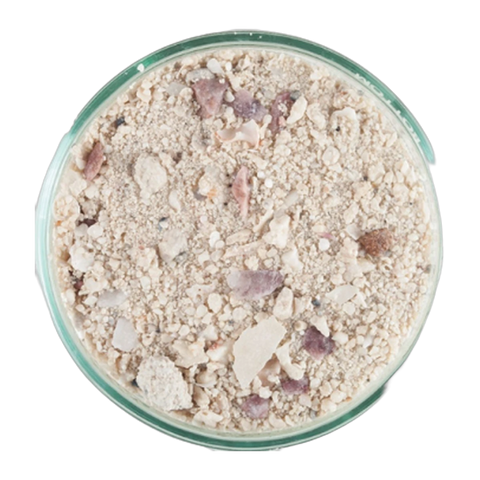
Fine pink reef sand that arrives already carrying its bacteria. CaribSea Arag-Alive Fiji Pink is a biologically active aragonite reef sand with a grain size of 0.5 to 1.5 mm, supplied damp in either a 10 lb (4.536 kg) or a 20 lb (9.072 kg) bag. It sits in the middle of CaribSea's live sand range: fine enough to read as sand rather than gravel, coarse enough that it is not the sugar-grade oolite that lifts into the water column the moment a powerhead points at it. Because aragonite raises pH and carbonate hardness, this is a marine, reef and African cichlid substrate rather than a general-purpose one.
Key features
- Supplied damp and biologically active - CaribSea packs Arag-Alive wet with live bacteria rather than dry, so the bed starts processing ammonia sooner than a dry sand that has to be colonised from scratch.
- 0.5 to 1.5 mm grain - fine enough for sand-sifting gobies and burrowing wrasses to pick up and move, which a 2 mm-plus grade is not.
- No rinsing - CaribSea's instruction is to open the bag and put the contents straight in. Rinsing washes the bacteria you paid for down the drain.
- Raises pH and carbonate hardness - aragonite dissolves slowly at reef pH, adding carbonate to the water rather than consuming it.
- Natural pink tone - the colour is the mineral and shell content of the sand itself, not a coating or a dye that can wear off.
- Two bag sizes - 4.536 kg for topping up or for a nano footprint, 9.072 kg for building a full bed.
How much do I need?
This is the question a sand page has to answer, so here it is first. The figures come from CaribSea's own published bulk density for Arag-Alive of 100 lb per cubic foot, which works out to 1.60 kg per litre of finished bed.
| Tank footprint | 2.5 cm bed | 5 cm bed | 7.5 cm bed |
|---|---|---|---|
| 60 x 30 cm | 7.2 kg | 14.4 kg | 21.6 kg |
| 60 x 45 cm | 10.8 kg | 21.6 kg | 32.4 kg |
| 90 x 38 cm | 13.7 kg | 27.4 kg | 41.1 kg |
| 120 x 45 cm | 21.6 kg | 43.2 kg | 64.9 kg |
| 150 x 60 cm | 36.0 kg | 72.1 kg | 108.1 kg |
| 180 x 60 cm | 43.2 kg | 86.5 kg | 129.8 kg |
Turning kilograms into bags
Divide the figure above by 9.072 for 20 lb bags, or by 4.536 for 10 lb bags, and round up. A 120 x 45 cm tank at 5 cm needs 43.2 kg, which is five 20 lb bags. A 60 x 30 cm tank at 5 cm needs 14.4 kg, which is most neatly bought as one 20 lb bag plus one 10 lb bag.
Two adjustments worth making. Rock placed directly on the glass displaces sand, so a heavily scaped tank needs a little less than the table says. A bed that slopes front to back should be worked out on its average depth, not its deepest point.
Specifications
| Grain size | 0.5 to 1.5 mm (both bag sizes) |
|---|---|
| Material | Aragonite, supplied damp and biologically active |
| Bulk density | 100 lb per cubic foot (1.60 kg per litre of bed) |
| Effect on water | Raises pH and carbonate hardness |
| Rinsing | Not required, and not recommended |
| Water type | Marine and reef; also hard, alkaline African cichlid tanks |
By bag size
| Bag | Weight | Bed volume | Supplier code |
|---|---|---|---|
| 10 lb | 4.536 kg | Approximately 2.8 litres | CS1792 |
| 20 lb | 9.072 kg | Approximately 5.7 litres | CS0792 |
Which Arag-Alive grade do I need?
All four grades below are supplied damp and biologically active. The only meaningful difference between them is grain size, and grain size decides two things: whether the bed stays put under your flow, and whether your livestock can move it.
| Grade | Grain size | Best for |
|---|---|---|
| Arag-Alive Fiji Pink | 0.5 to 1.5 mm | Fine pink bed; workable by sand-sifting gobies and burrowing wrasses |
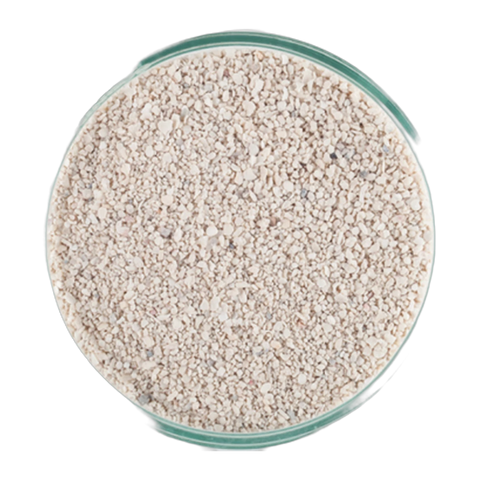
| Arag-Alive Special Grade Reef | 1.0 to 2.0 mm | Higher-flow reef systems where a finer sand would scour into drifts |
| Arag-Alive Bimini Pink | 0.5 to 5.0 mm | Mixed pink bed with visible shell fragments |
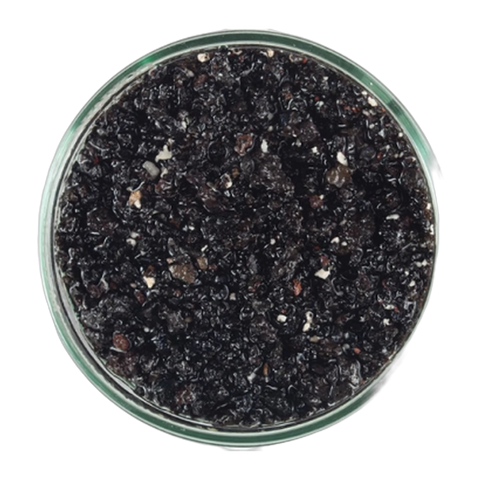
| Arag-Alive Hawaiian Black | 0.25 to 3.5 mm | Dark contrast beds |
We also stock Arag-Alive Natural Reef as a coarse grade, and AragaMax Select as a dry sand for anyone who does not need the bacteria.
Setting it up
- Put the sand in first, into an empty tank. CaribSea is specific about the order: sand, then water.
- Level the bed, then place rockwork on the bare glass wherever you can, so nothing topples if a fish excavates underneath it.
- Add water onto a plate or an upturned bowl resting on the sand, so the stream does not crater the bed.
- Start the filtration and expect cloudiness. Fine grades cloud more than coarse ones on the way in, and it settles.
Suitable for, and not suitable for
Suitable for: marine fish-only and reef aquariums; refugium and sump beds; hard, alkaline African cichlid tanks; and tanks housing sand-sifting gobies, jawfish or burrowing wrasses that need a grain small enough to pick up.
Not suitable for: planted freshwater aquariums, soft-water community tanks, blackwater setups and anything that needs an acidic pH. Aragonite raises pH and carbonate hardness and there is no way to switch that behaviour off. It is also the wrong choice directly under a powerhead pointed at the substrate, where a coarser grade such as Special Grade Reef will hold its position better.
Care and maintenance
A shallow bed of around 2.5 cm can be lightly siphoned at water changes. Beds over about 5 cm are normally left undisturbed below the surface, because stirring accumulated material back into the water column is what causes trouble.
There is no replacement schedule. Aragonite dissolves slowly, so top up with a 10 lb bag if the depth drops noticeably after a few years.
Goes well with
- CaribSea Life Rock Shapes - aquascaping rock designed to sit on the glass under the sand bed.
- CaribSea South Seas Base Rock - lower-cost structural rock for the base of a scape.
- CaribSea Purple-Up - for encouraging coralline algae onto the rock once the tank is running.
Warranty and delivery
CaribSea does not publish a warranty term for its substrates, which is normal for a consumable. Your rights under the Australian Consumer Law apply regardless and are not limited by what the manufacturer does or does not offer.
Sand is heavy. A 120 x 45 cm tank at 5 cm depth is 43.2 kg of product, so check the freight total before ordering a full bed rather than after.
Common questions
Do I need to rinse CaribSea Arag-Alive Fiji Pink before use?
No. CaribSea's instruction is to open the bag and place the contents directly into the aquarium. Rinsing removes the live bacteria that are the entire reason for buying live sand instead of dry sand.
Is Fiji Pink fine enough for a sand-sifting goby?
Yes. At 0.5 to 1.5 mm the grain is small enough for sifting gobies, jawfish and burrowing wrasses to pick up and pass through their gills, which a 2 mm-plus grade is not.
How much Fiji Pink does a 60 x 30 cm tank need?
About 14.4 kg for a 5 cm bed, or 7.2 kg for a 2.5 cm bed. That is one 20 lb bag plus one 10 lb bag for the deeper option.
Can I use Fiji Pink in a freshwater tank?
Only in a hard, alkaline setup such as an African cichlid tank. Aragonite raises pH and carbonate hardness, so it is wrong for planted tanks, soft-water community fish and anything from an acidic habitat.
Will Fiji Pink blow around?
It can, in a high-flow SPS system or under a powerhead aimed at the substrate. At 0.5 to 1.5 mm it is more stable than a sugar-grade oolite but less stable than Special Grade Reef at 1.0 to 2.0 mm.
Can I add Fiji Pink to a tank that is already running?
Yes, but do it gradually. Rinse-free live sand will cloud an established tank for a day or two, so add it a few kilograms at a time and pour it in slowly through a length of pipe rather than tipping the bag in.