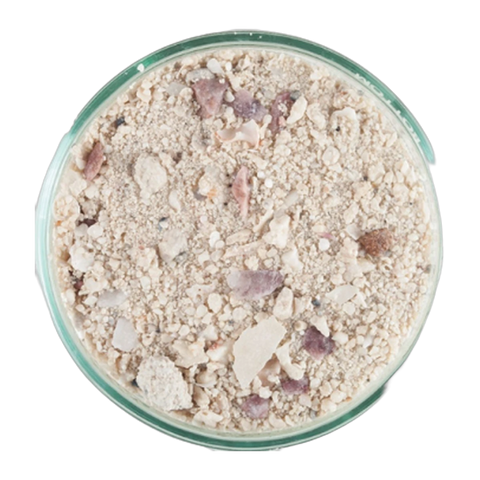
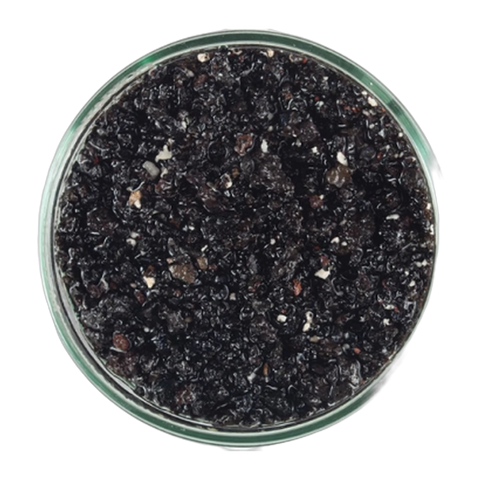
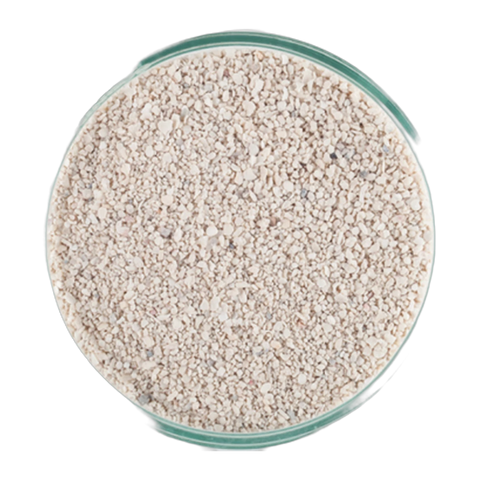
CaribSea Arag-Alive Special Grade Reef

Pack size
10 lb (4.5 kg)
Water type
Marine
Pack size
20 lb (9.1 kg)
Water type
Marine
CaribSea Arag-Alive Special Grade Reef
The live sand grade that stays where you put it. CaribSea Arag-Alive Special Grade Reef is a biologically active aragonite reef sand with a grain size of 1.0 to 2.0 mm, supplied damp in a 10 lb (4.536 kg) or 20 lb (9.072 kg) bag. It is the coarsest of CaribSea's mid-range live grades, and that is the whole point of it: at 1 to 2 mm the bed resists scouring in a system running the turnover an SPS reef wants, where a finer sand would pile into drifts within a week. Being aragonite, it raises pH and carbonate hardness, so it belongs in marine, reef and African cichlid tanks only.
Key features
- 1.0 to 2.0 mm grain - heavy enough per grain to hold position under high turnover, so the bed keeps the contour you gave it.
- Supplied damp with live bacteria - CaribSea packs Arag-Alive wet and biologically active, which shortens the period before the bed starts processing ammonia.
- No rinsing before use - CaribSea says open the bag and place the contents straight into the tank. Rinsing removes the bacteria.
- Buffers pH and alkalinity - aragonite dissolves slowly at reef pH, contributing carbonate rather than consuming it.
- Clears faster than a fine sand - a coarser grain carries less fine dust into the water column when the tank is filled.
- Two bag sizes - 4.536 kg for topping up or patching a scoured area, 9.072 kg for building the bed.
How much do I need?
Worked from CaribSea's published bulk density for Arag-Alive of 100 lb per cubic foot, which is 1.60 kg per litre of finished bed.
| Tank footprint | 2.5 cm bed | 5 cm bed | 7.5 cm bed |
|---|---|---|---|
| 60 x 30 cm | 7.2 kg | 14.4 kg | 21.6 kg |
| 60 x 45 cm | 10.8 kg | 21.6 kg | 32.4 kg |
| 90 x 38 cm | 13.7 kg | 27.4 kg | 41.1 kg |
| 120 x 45 cm | 21.6 kg | 43.2 kg | 64.9 kg |
| 150 x 60 cm | 36.0 kg | 72.1 kg | 108.1 kg |
| 180 x 60 cm | 43.2 kg | 86.5 kg | 129.8 kg |
Turning kilograms into bags
Divide by 9.072 for 20 lb bags or 4.536 for 10 lb bags, then round up. A 150 x 60 cm reef at 5 cm depth is 72.1 kg, which is eight 20 lb bags. A 90 x 38 cm tank at 2.5 cm is 13.7 kg, most economically one 20 lb bag plus one 10 lb bag.
Rock sitting directly on the glass displaces sand, so a rock-heavy scape needs less than the table shows. Work a sloped bed out on its average depth rather than the deepest corner.
Specifications
| Grain size | 1.0 to 2.0 mm (both bag sizes) |
|---|---|
| Material | Aragonite, supplied damp and biologically active |
| Bulk density | 100 lb per cubic foot (1.60 kg per litre of bed) |
| Effect on water | Raises pH and carbonate hardness |
| Rinsing | Not required, and not recommended |
| Water type | Marine and reef; also hard, alkaline African cichlid tanks |
By bag size
| Bag | Weight | Bed volume | Supplier code |
|---|---|---|---|
| 10 lb | 4.536 kg | Approximately 2.8 litres | CS1790 |
| 20 lb | 9.072 kg | Approximately 5.7 litres | CS0790 |
Which Arag-Alive grade do I need?
All four are supplied damp and biologically active. Grain size is the only meaningful difference, and it decides whether the bed holds its shape under your flow and whether your livestock can move it.
| Grade | Grain size | Best for |
|---|---|---|
| Arag-Alive Special Grade Reef | 1.0 to 2.0 mm | Higher-flow reef systems where a finer sand would scour into drifts |
| Arag-Alive Fiji Pink | 0.5 to 1.5 mm | Fine pink bed; workable by sand-sifting gobies and burrowing wrasses |
| Arag-Alive Bimini Pink | 0.5 to 5.0 mm | Mixed pink bed with visible shell fragments |
| Arag-Alive Hawaiian Black | 0.25 to 3.5 mm | Dark contrast beds |
For a coarser gravel grade see Arag-Alive Natural Reef. If the live bacteria are not what you are paying for, AragaMax Select is the dry alternative.
Setting it up
- Sand into an empty tank first, then water. CaribSea is explicit about that order.
- Level the bed and set rockwork on the bare glass wherever the scape allows, so nothing shifts if a fish digs beneath it.
- Fill onto a plate or upturned bowl sitting on the sand so the incoming stream does not dig a crater.
- Run filtration. A 1 to 2 mm grade throws less dust than a fine sand, so expect a shorter cloudy period.
Suitable for, and not suitable for
Suitable for: reef aquariums running high turnover; marine fish-only systems; beds sitting under and around rockwork where scouring is a problem; refugiums; and hard, alkaline African cichlid tanks.
Not suitable for: planted freshwater tanks, soft-water community tanks and blackwater setups, because aragonite raises pH and carbonate hardness permanently. It is also a poor burrowing medium for sand-sifting gobies and jawfish, which need a grain they can actually pick up - Arag-Alive Fiji Pink at 0.5 to 1.5 mm is the better bed for those species.
Care and maintenance
A coarser grain lets detritus settle between the particles rather than sitting on top, so a shallow bed of around 2.5 cm benefits from a light siphon at water changes. Beds over 5 cm are normally left undisturbed below the surface.
No replacement schedule applies. Aragonite dissolves very slowly, so top up with a 10 lb bag if the depth drops over the years or if a powerhead has scoured a low spot.
Goes well with
- CaribSea South Seas Base Rock - structural rock to sit on the glass before the sand goes in.
- CaribSea Life Rock Shelf Rock - flat shelving pieces for building overhangs above the bed.
- CaribSea Purple-Up - to push coralline algae onto the rock once the system is stable.
Warranty and delivery
CaribSea publishes no warranty term for its substrates, which is normal for a consumable. Your rights under the Australian Consumer Law apply regardless and are not reduced by that.
A full bed is heavy freight. A 150 x 60 cm reef at 5 cm depth is 72.1 kg of sand, so price the delivery before you commit to the order.
Common questions
What is the grain size of CaribSea Arag-Alive Special Grade Reef?
1.0 to 2.0 mm. That makes it coarser than Fiji Pink at 0.5 to 1.5 mm and finer than a crushed coral gravel, and it is the grade CaribSea positions for reef systems with real flow.
Will Special Grade Reef stop my sand blowing into drifts?
It reduces it substantially compared with a sugar-fine sand, because each grain is heavier. No sand grade resists a powerhead aimed directly down at the substrate, so aim flow across the bed rather than into it.
Do I rinse it first?
No. CaribSea's instruction is to open the bag and tip the contents straight into the aquarium. Rinsing removes the live bacteria the product is sold for.
How much do I need for a 120 x 45 cm tank?
43.2 kg for a 5 cm bed, or 21.6 kg for a 2.5 cm bed. The deeper option is five 20 lb bags.
Can I mix Special Grade Reef with a finer sand?
Yes, and it is a common approach - the coarser grade in the high-flow zones and under the rockwork, a finer grade across the open front where the look matters. Both are aragonite, so they behave the same chemically.
Is it safe for an African cichlid tank?
Yes. Raising pH and carbonate hardness is exactly what a Rift Lake tank wants, and 1 to 2 mm is coarse enough that digging cichlids will not cloud the water every time they excavate.