AquaVitro Mineralize


Water type
Freshwater
AquaVitro Mineralize
Raises general hardness for the plants that actually want it, one measured dose at a time. aquavitro mineralize is a blend of divalent salts - calcium and magnesium ions - dosed to lift general hardness (GH) in a planted freshwater aquarium, for species that grow better in harder water than tap or RO water alone provides.
Key features
- Raises GH by a known amount per dose - 5 mL per 40 L lifts GH by 1 meq/L (2.8 dGH), so you can dose to a target rather than guessing.
- Calcium and magnesium based - a blend of divalent salts, not a single mineral.
- Suits hard-water species without overshooting soft-water ones - dose it into new water rather than the display tank, so you control exactly how much a water change changes hardness by.
- Costs low cents per litre - see Cost per litre below, and the 350 mL is the cheaper of the two sizes per litre dosed.
Specifications
| Size | Price | GH raised per 5 mL dose |
|---|---|---|
| 150 mL | $19.95 | 1 meq/L (2.8 dGH) per 40 L |
| 350 mL | $33.95 | 1 meq/L (2.8 dGH) per 40 L |
| Active constituents | Blend of divalent salts (calcium and magnesium) |
|---|---|
| Water type | Freshwater, planted aquariums |
| Form | Liquid |
Seachem does not publish an itemised ingredient declaration for mineralize beyond describing it as a blend of divalent salts - we've stated what's published and no more.
Will it suit my plants?
| GH range (meq/L) | Classification | Typical plants |
|---|---|---|
| 0-1 | Soft | Cryptocoryne, Aponogeton |
| 1-2 | Moderately soft | Most community planted-tank species |
| 2-3 | Slightly hard | - |
| 3-4 | Moderately hard | - |
| 4-5 | Hard | Sagittaria subulata, Riccia fluitans |
| 5-6 | Very hard | - |
Test your water's GH before dosing. If you don't know where you're starting from, you can't dose to a target.
Dosage and directions
Add 5 mL per 40 L (10 US gallons) to new water when setting up a tank or doing a water change, then dose weekly, or as needed, to maintain the target hardness. Each 5 mL dose raises GH by 1 meq/L (2.8 dGH) in that volume.
Cost per litre
| Size | Price | Litres dosed over the bottle's life | Cost per litre |
|---|---|---|---|
| 150 mL | $19.95 | 1,200 L (30 doses x 40 L) | 1.6c per litre |
| 350 mL | $33.95 | 2,800 L (70 doses x 40 L) | 1.2c per litre |
The 350 mL is the genuinely cheaper size here - about a quarter less per litre dosed than the 150 mL, on top of needing fewer bottle changes.
Suitable for, and not suitable for
Suitable for: freshwater planted aquariums where GH needs raising for hard-water species, and RO or very soft tap water setups that need mineral content added back in.
Not suitable for: soft-water and blackwater species that need GH kept low - dosing this into a Cryptocoryne or Amazonian blackwater tank works against what those plants and fish want.
Care and maintenance
Test GH periodically rather than dosing on a fixed schedule indefinitely - once a tank reaches its target hardness, ongoing dosing needs are usually much lighter than the initial set-up dose.
Goes well with
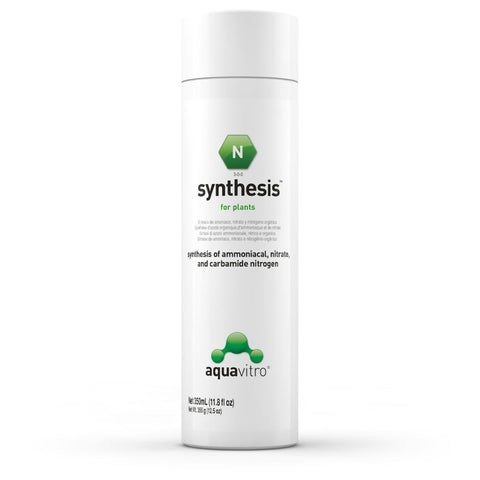
- aquavitro synthesis - macro and micro-nutrient fertiliser for the same planted tank.
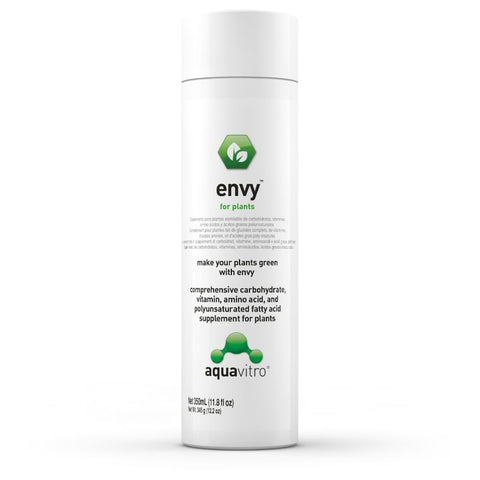
- aquavitro envy - vitamin, amino acid and fatty acid supplement for the same routine.
Warranty and delivery
Seachem does not publish a separate warranty term for aquavitro liquid supplements. Your rights under the Australian Consumer Law apply regardless. Standard freight.
Common questions
How do I know if I need this?
Test your tank's GH. If it's running soft for the plants you're keeping - RO water or naturally soft tap water is the usual cause - mineralize lifts it in known, measured steps rather than by guesswork.
Will it affect pH?
Seachem markets mineralize specifically as a general hardness supplement rather than a pH or KH buffer; check your KH and pH separately if you need to manage those too.
Can I use it in a shrimp tank?
Many freshwater shrimp benefit from moderate GH, but check your species' preferred range first - some, like caridina shrimp, want harder water; others want it soft. Dose to a tested target rather than a fixed schedule.
Which size is better value?
The 350 mL, on both counts - it works out cheaper per litre dosed than the 150 mL, and it's fewer bottles to buy over the same period of use.