Orange Phase Hypo Trans Bearded Dragon | Pogona vitticeps


The size this animal usually reaches as an adult. Babies grow quickly, so plan its enclosure around the adult size.
General guide only. Every enclosure is different, so make one change at a time and watch how your animal responds.
The enclosure size we recommend for an adult, shown as length × width × height. Bigger is better, as it gives more room for a proper warm end and cool end.
General guide only. Every enclosure is different, so make one change at a time and watch how your animal responds.
Hot Zone: 40°C
Reptiles cannot make their own body heat. They warm up and cool down by moving between warm and cool spots. Set up a hot end and a cool end, run every heat source through a thermostat, and check both ends with a thermometer.
General guide only. Every enclosure is different, so make one change at a time and watch how your animal responds.
How much moisture this animal needs in the air of its enclosure. Check it with a hygrometer (humidity gauge). Too dry can cause shedding problems, and too wet can lead to skin and breathing problems.
General guide only. Every enclosure is different, so make one change at a time and watch how your animal responds.
How long this animal can live with good care. Many reptiles live for decades, so they are a long-term commitment.
General guide only. Every enclosure is different, so make one change at a time and watch how your animal responds.
Best for keepers with some experience who check their setup regularly.
Our rating of how forgiving this animal is of beginner mistakes and small changes in its care.
General guide only. Every enclosure is different, so make one change at a time and watch how your animal responds.
Omnivore. Eats both meaty and plant-based foods, so offer a mix.
What this animal eats. Feeding a varied diet suited to its type helps keep it healthy and showing its best colour.
General guide only. Every enclosure is different, so make one change at a time and watch how your animal responds.
A guide to how often to feed. Offer only what is eaten, and remove leftovers so they do not foul the water or the enclosure.
General guide only. Every enclosure is different, so make one change at a time and watch how your animal responds.
Where it's found in the wild
Inland eastern and central Australia
- Natural range
Range details
Range: A captive-bred colour form. Its wild ancestor, the central bearded dragon, is found only in Australia, across the dry inland east and centre. It lives in desert, open shrubland, woodland and grassland, and is active by day.
In Australia: Inland Queensland north to the Gulf country, western New South Wales, north-west Victoria, South Australia and the southern half of the Northern Territory.
Map shading is approximate and shows the natural range in the wild, not every place it lives.
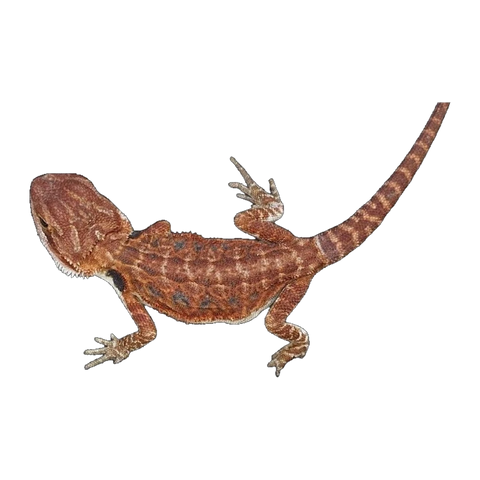
Colour & specimen: Colouration and pattern can vary between individual animals and may shift with lighting, temperature, humidity, mood and shedding cycle. You will not receive this exact animal pictured; the one you receive will be a similar size, colour and condition.
WA & TAS orders: state biosecurity regulations restrict which live animals can be sent to Western Australia and Tasmania – please check what we can send to you before ordering. See delivery info
Orange Phase Hypo Trans Bearded Dragon Pogona vitticeps
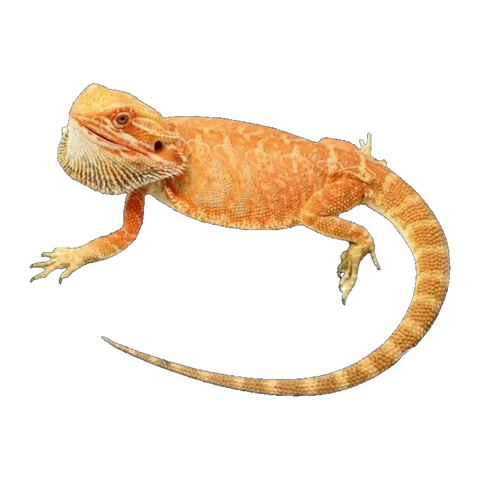
The Orange Phase Hypo Trans Bearded Dragon pairs warm orange colour with the hypomelanistic and translucent traits for a clean, bright look - a bold, curious, day-active lizard that is one of the most rewarding reptiles to keep. Hand-raised Australian stock.
 Natural Habitat

Central Bearded Dragons inhabit the arid and semi-arid interior of central and eastern Australia, basking on branches, fence posts and rocks in open woodland, shrubland and rocky desert. Natural origin for this listing is arid and semi-arid central and eastern Australia. In captivity the enclosure should recreate that warm, dry, brightly lit environment with a strong basking zone, a cooler retreat, sturdy climbing branches and low humidity. These are active, sun-loving lizards that need space, heat and high-quality UVB to thrive.
 Appearance

A healthy dragon shows clear eyes, full body condition, alert posture and a strong feeding response. This animal carries hypomelanistic and translucent (hypo trans) traits over an orange base: hypo reduces dark pigment for cleaner colour and pale nails, while translucent gives clearer skin and often darker eyes, so the orange reads bright and crisp. Adult size is generally 40–60 cm, so the animal should never be purchased only for its current size, and colour is usually best displayed once the dragon is settled and feeding confidently.
 Temperament and Compatibility

Temperament is best described as bold, curious and diurnal, and most hand-raised dragons tolerate regular gentle handling well. Adults are territorial, however, and are best housed one to an enclosure. Two males will fight, and mixed or same-sex groups can lead to bullying, tail and toe loss, stress and uneven feeding, so cohabitation is not recommended for pet keepers.
 Feeding

Feed as an omnivore. Juveniles eat a higher proportion of live insects such as appropriately sized crickets, woodies and black soldier fly larvae, with a smaller amount of finely chopped leafy greens and vegetables. As they mature the balance shifts toward more greens and vegetables and fewer insects. Dust insects with a calcium supplement and use a reptile multivitamin as directed, and gut-load feeder insects before offering. Feed juveniles daily and offer adults salad most days with insects a few times a week. Never feed prey larger than the space between the dragon's eyes.
 Care Requirements

A single adult needs a minimum enclosure of 120 x 60 x 60 cm, with larger always better. Provide a hot basking zone of 38–42°C at one end and a cooler end of 24–28°C, with a night-time drop to around 18–22°C. High-output UVB (a linear 10–12% tube) is essential for calcium metabolism, should run 10–12 hours a day and be replaced as recommended. Keep humidity low, generally 30–40%, as this arid species is prone to respiratory problems in damp conditions. Use a firm, non-impaction substrate for adults and furnish the enclosure with a basking platform, hides and climbing branches. Provide a shallow water dish and spot-clean regularly, with periodic full substrate changes.
 Breeding

Bearded dragons are egg-layers, bred in captivity after a cooling (brumation) period that cycles the adults. Following mating, females dig and lay clutches of roughly 15–30 eggs, incubated at controlled temperatures for around 55–75 days. Breeding should only be attempted by prepared keepers with the space and resources to raise large numbers of hatchlings, and appropriate licensing.
 Species Information

| Scientific Name | Pogona vitticeps |
| Common Name | Orange Phase Hypo Trans Bearded Dragon |
| Origin | Arid and semi-arid woodland, shrubland and rocky desert of central and eastern Australia |
| Maximum Size | 40–60 cm |
| Lifespan | 8–14 years |
| Temperament | Bold, curious and diurnal; generally docile and tolerant of handling |
| Difficulty | Intermediate |
| Minimum Enclosure Size | 120 x 60 x 60 cm for one adult |
| Recommended Enclosure Size | Larger than 120 x 60 x 60 cm, single occupant |
| Diet | Omnivore - live insects plus leafy greens and vegetables |
| Basking Temperature | 38–42°C |
| Ambient Temperature | 24–28°C day, 18–22°C night |
| UVB Required | Yes – UV Index 3.0–4.5 at basking + 10–12% UVB (T5 HO fluorescent) – high-output linear UVB essential (cap ~3.0 UVI for hypo/translucent/leatherback/silkback morphs) |
| Humidity | Low, around 30–40% |
| Suitable For | Intermediate keepers wanting a bold, day-active display lizard |
| Licence Required | Yes - reptile keeper's licence in most Australian states |
 Suitable Tank Mates

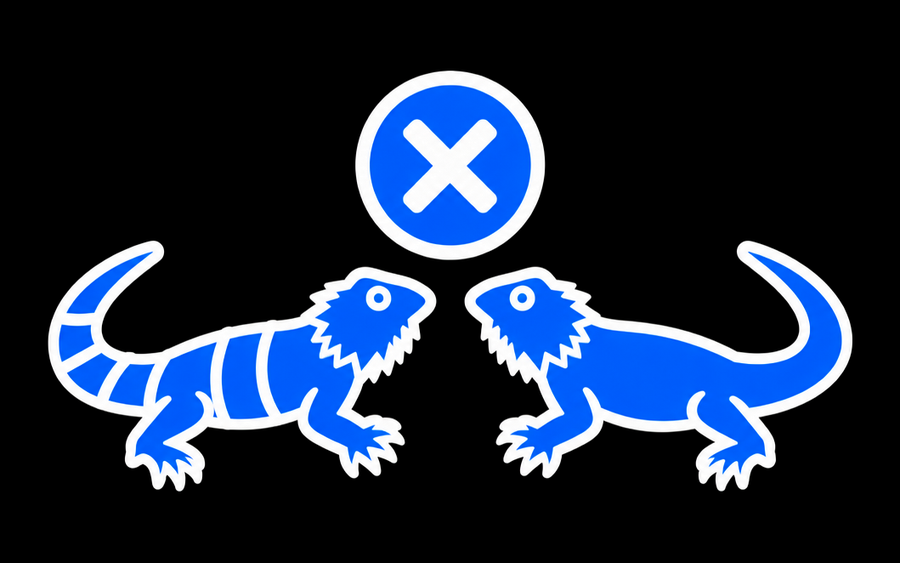
None is the safest answer. Central Bearded Dragons are best kept singly and do not need companionship. If a keeper intends to breed, a proven male and female are only introduced temporarily under supervision and then separated.
 Avoid Keeping With
Do not house long-term with other bearded dragons, with other lizard species, or with any small animals. Two males will fight, larger dragons may dominate or injure smaller ones, and mixed housing spreads parasites and disease.
Size options reflect the sizes we stock; any shown as sold out will return as we restock. Australian livestock for in-store collection or local delivery, with our live arrival guarantee. A reptile keeper's licence is required to buy and keep native reptiles and amphibians in most Australian states - please ensure you hold the appropriate licence for your state before purchasing.
Check compatibility
Most reptiles and frogs are solitary and shouldn't be housed together without species-specific advice – even similar-looking animals can stress or injure each other. Check this species' care sheet above, or contact us before combining species in one enclosure.
 Is your enclosure ready?

Is your enclosure ready?
A few quick checks before you buy save most of the common problems with new reptiles and frogs.
Size for the adult, not the juvenile
Check the species page for adult size and minimum enclosure size, and set up for what this animal will grow into – not what it looks like today.
Heating & temperature zones
Set up proper heating on a thermostat before your animal arrives, with the correct hot and cool zone temperatures for the species – check the species page for the exact range.
UVB lighting
Most reptiles need the correct UVB tube for their species. Replace tubes on the manufacturer's schedule even if they still look fine – UVB output drops off well before the globe visibly fails.
Humidity & misting
Dial in humidity and, if the species needs it, a misting routine before your animal arrives rather than adjusting it after.
Licence & permits
Keeping a native Australian species requires a valid wildlife licence. We can't dispatch until your licence and any required permits are verified, so sort this out before you order.
Full details: see our Reptile & Amphibian Purchasing Policy and our Reptile Care Sheets for species-specific setup guides.
 Delivery options

Where we ship
We are based in Brisbane and ship live fish and corals to most of Australia. Some states have import rules that may affect what we can send and the cost.
- Western Australia: Import requirements and fees may apply. Read first.
- Tasmania: Import requirements and fees may apply. Read first.
- Northern Territory: May require a permit and be subject to quarantine.
- Regional and remote areas: Carrier options can be limited, which may affect service and transit time.
If you are unsure we can reach your location, please contact us before ordering.
Airport to Airport (Toll Air Express)
Air freight from our local airport to your destination airport.
- Cost: $100
- Transit: Up to 16 hours
- DOA cover: Yes
- Dispatch: Thursday night for Friday airport pickup. Order by Thursday.
Priority Same Day Airport to Airport
Fast air freight from our local airport to your destination airport, available on request.
- Cost: $185
- Transit: Up to 12 hours
- DOA cover: Yes
- Dispatch: Monday to Thursday. Contact us to arrange.
Door to Door (Toll Priority)
We collect from our store and deliver directly to your address.
- Cost: $100
- Transit: 24 to 48 hours
- DOA cover: No
- Dispatch: Order by 6am on the day of dispatch. Orders after this cut off move to the next dispatch day.
Star Track Priority (Door to Door)
Combined road and air freight, delivered to your door.
- Cost: $55
- Transit: 24 to 72 hours
- DOA cover: No
- Dispatch: Monday, Tuesday and Wednesday. Order by 10am on the day of dispatch.
A note on timing: All transit times are estimates and can vary with your location, the weather, and carrier schedules. Regional and remote areas may take longer. To give your livestock the safest trip, please order early in the week.
 Packed Safe

Secure, Ventilated Boxes
Each animal travels in a secure, well-ventilated box or breathable bag appropriate to its species and size, so it stays safely contained with adequate airflow for the whole journey – a different process to how we pack fish, corals and plants.
No Room to Move
Any empty space inside the box is filled with packing materials such as paper or bubble wrap, so containers stay secure and can't shift in transit.
Clearly Labelled
Every box is sealed with our custom packing tape and clearly labelled as livestock, so freight handlers know exactly what they're carrying.
When Your Animal Arrives
Please collect your animal promptly on arrival and allow it to settle quietly in its prepared enclosure before handling.
Questions about packing or shipping to your area? Email us at sales@nicksaquariumoceanariumterrarium.com.au – we're always happy to talk through it before you order.
 Arrive Alive Guarantee

Arrive Alive Guarantee (DOA & DAA)
Reptiles and frogs are covered by the same Arrive Alive Guarantee as the rest of our livestock. This applies to air freight shipments only.
Dead on Arrival (DOA)
If your animal arrives deceased, take clear photos or video in the sealed, unopened travel box or bag, and send your claim by email or text message within 4 hours of receiving your order. Claims by Facebook Messenger or phone cannot be accepted, and claims made after 4 hours may be declined. Please include your name, order number, approximate time received, and details of the animal affected.
Death After Arrival (DAA)
DAA cover extends up to 12 hours after airport pickup. Clear photos or video are required, submitted within 24 hours of delivery, and the animal must have been housed in a fully set up, correctly heated enclosure.
If your claim is approved
We will offer store credit or a replacement of the same item, subject to availability. Shipping charges and fees are non-refundable.
To keep your cover valid
Be present at the airport or at home to receive your order, and collect it promptly. Animals left unattended, returned to a depot, or delayed in collection may void cover. We can only ship to a valid residential or business address, not PO boxes or third-party addresses.
7-Day Reptile Health Guarantee
On top of Arrive Alive cover, reptiles get an additional 7-day health guarantee that fish don't have. All reptiles are assessed before sale and confirmed eating, drinking and behaving normally. If a major health issue is confirmed by a vet to have been present before sale, we'll offer a refund or a replacement of equal value.
- Get a full veterinary exam within 7 days of purchase, with a detailed written report – a reptile specialist vet is strongly recommended.
- Vet costs are the buyer's responsibility.
- Not covered: issues caused by incorrect temperature or humidity, enclosure setup, inadequate quarantine, transport stress, or reptile viral diseases (these aren't tested for prior to sale).
Full terms: see our Guarantees & Policies page (sections 1 and 3).
 Quarantine

Why quarantine
Quarantining a new reptile or frog in an isolated area away from your existing collection protects the animals you already keep, and gives your new arrival time to settle in without added stress.
Recommended approach
Keep the new animal in a separate room or enclosure from your existing collection, and wash your hands (or change gloves) between handling different animals to avoid cross-contamination.
Vet check
A full veterinary exam within the first week is a good idea for any new reptile or frog, and it's required if you ever need to make a claim under our 7-Day Reptile Health Guarantee.
Full details: see our Reptile Health Guarantee Policy and Reptile Care Sheets.
 Acclimation

Before your animal arrives
The enclosure must be fully set up and running at the correct temperature, UVB output and humidity before your animal comes home – not almost set up, fully running and verified with thermometers. An animal arriving into an enclosure that's still warming up, or with an untested UVB lamp, starts its time with you under unnecessary stress.
Settling in
Place your animal directly into its enclosure as calmly and quickly as possible, with minimal handling. Leave it completely undisturbed for five to seven days – no handling, no rearranging, no repeatedly opening the enclosure to check on it (brief visual checks from a distance are fine). Hold off feeding for the first 48 to 72 hours, and keep the room quiet during this period – noise, vibration and foot traffic near the enclosure all delay settling.
Frogs
Frogs absorb water and chemicals directly through their skin, so never handle a frog with dry hands or hands with soap, sunscreen, insect repellent or lotion on them – use clean, wet, powder-free hands or powder-free gloves. Always dechlorinate any water that goes into a frog enclosure, including misting water. The five-to-seven-day settling-in rule applies especially firmly to frogs, and most will spend the first several days hidden and motionless – this is normal.
Axolotls
Axolotls need cool water between 14 and 18°C and start experiencing serious stress above 20°C – anything above 22°C is dangerous. Confirm your tank temperature is in range with a thermometer before your axolotl arrives, and dechlorinate all water, since their permeable skin absorbs substances directly from it.
Full details: see our Acclimation Guide for species-specific setup, and our Reptile Care Sheets and Frog Care Sheets.
Complete the setup
Everything your new arrival needs from day one