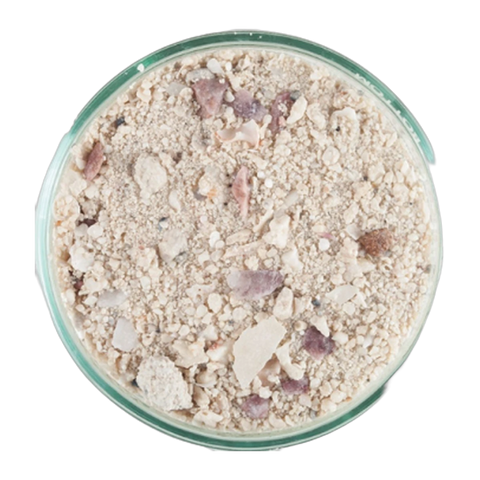
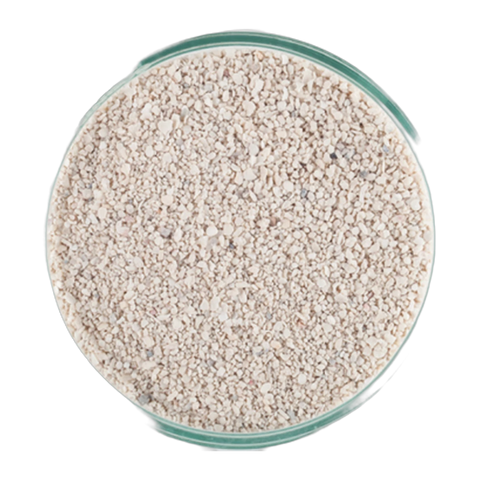
Seaflor Special Grade Reef Sand 40lb (18kg)

Pack size
40 lb (18 kg) bag
Water type
Marine
Part no.
CS0050
Delivery
Heavy
Seaflor Special Grade Reef Sand 40lb (18kg)
Aragonite sand that buffers your reef the moment it settles. CaribSea Seaflor Special Grade Reef Sand is an 18 kg (40 lb) bag of 1.0 to 2.0 mm aragonite sand, a fine-to-medium grade built for reef and FOWLR tanks that want a natural seabed rather than crushed coral chunks. Being aragonite, it is calcium carbonate through and through, so it buffers pH and carbonate hardness upward and keeps doing so for as long as it is in the tank - the question this page has to answer is how many bags that actually takes.
How much do I need?
CaribSea publishes a bulk density of 85 lb per cubic foot for Special Grade Reef Sand, which works out to 1.36 kg per litre of settled bed. The table below uses that figure to work out weight and bag count for common Australian tank footprints, rounded up to the next whole 18 kg bag.
| Tank footprint | 2.5 cm bed | 5 cm bed | 7.5 cm bed |
|---|---|---|---|
| 60 x 30 cm | 6.1 kg - 1 bag | 12.3 kg - 1 bag | 18.4 kg - 2 bags |
| 90 x 38 cm | 11.6 kg - 1 bag | 23.3 kg - 2 bags | 34.9 kg - 2 bags |
| 120 x 45 cm | 18.4 kg - 2 bags | 36.8 kg - 3 bags | 55.1 kg - 4 bags |
| 150 x 60 cm | 30.6 kg - 2 bags | 61.3 kg - 4 bags | 91.9 kg - 6 bags |
| 180 x 60 cm | 36.8 kg - 3 bags | 73.5 kg - 5 bags | 110.3 kg - 7 bags |
A note on depth
2.5 cm gives a thin aesthetic sand line over the display base. 5 cm is the common all-round reef depth. Beds past about 7.5 cm move into deep-sand-bed territory, which some reefers run deliberately for denitrification, but which needs proper husbandry to avoid becoming a hydrogen sulphide trap - it is a deliberate technique, not a default to drift into.
Specifications
| Grain size | 1.0 to 2.0 mm |
|---|---|
| Bag weight | 40 lb (18 kg) |
| Bulk density | 85 lb per cubic foot (1.36 kg per litre) |
| Bed volume per bag | Approximately 13.3 litres |
| Material | Aragonite (calcium carbonate) |
| Effect on water | Buffers pH and carbonate hardness upward |
| Rinsing | Recommended - ships dry, not in a conditioning solution |
| Water type | Marine - reef and FOWLR |
| Supplier code | CS0050 |
Rinsing before use
Unlike CaribSea's Arag-Alive range, Seaflor Special Grade ships dry rather than in a bacterial conditioning solution. Rinse it in a bucket of fresh water, swirling and pouring off the cloudy water, until it runs close to clear before adding it to the tank. Skipping this step is the single biggest cause of a sand-storm display on day one.
Suitable for, and not suitable for
Suitable for: reef tanks, FOWLR systems, and any marine setup that wants a natural-looking sand bed that also buffers pH upward.
Not suitable for: freshwater aquariums of any kind. Aragonite raises pH and hardness, which is wrong for planted, soft-water and most community freshwater setups.
Goes well with
- CaribSea South Seas Base Rock - a foundation rock that buffers the same way, for matched water chemistry under the sand bed.
- CaribSea Life Rock Shelf Rock - aragonite display rock that pairs visually and chemically with this sand.
Warranty and delivery
CaribSea does not publish a warranty term for its substrates. Your rights under the Australian Consumer Law apply regardless. A full 150 x 60 cm tank at 5 cm depth needs around four bags, close to 73 kg, so check the freight total before ordering a full bed.
Common questions
Do I need to rinse this sand before use?
Yes. It ships dry rather than in a conditioning solution, so rinse it until the water runs close to clear or expect a cloudy tank for the first day or two.
How much will it raise my pH?
It buffers against downward drift rather than driving pH to one fixed number - the result depends on your source water, your KH and your bioload. It will help hold a reef tank in the stable alkaline range aragonite systems need.
Can I use this in a freshwater tank?
No. It will push pH and hardness upward, which suits a reef tank but works against most freshwater setups, including planted tanks and soft-water community fish.
How deep should my sand bed be?
Around 5 cm suits most reef tanks. Thinner beds are mostly aesthetic; beds beyond about 7.5 cm are a deliberate deep-sand-bed technique that needs its own maintenance approach rather than something to fall into by accident.