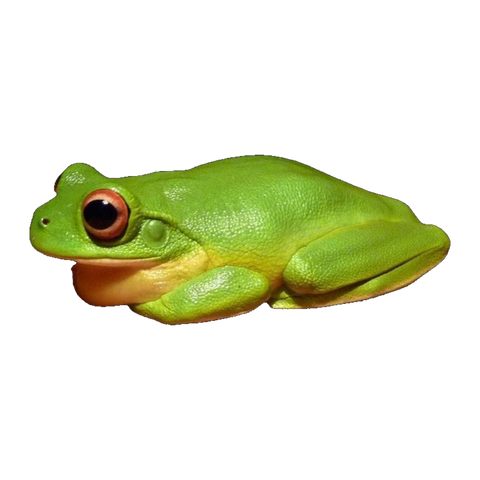
White Axolotl | Ambystoma mexicanum


The size this animal usually reaches as an adult. Babies grow quickly, so plan its enclosure around the adult size.
General guide only. Every enclosure is different, so make one change at a time and watch how your animal responds.
The enclosure size we recommend for an adult, shown as length × width × height. Bigger is better, as it gives more room for a proper warm end and cool end.
General guide only. Every enclosure is different, so make one change at a time and watch how your animal responds.
The temperature range this animal needs. Run any heater through a thermostat and check the temperature with a thermometer, as reptiles and frogs rely on their surroundings for warmth.
General guide only. Every enclosure is different, so make one change at a time and watch how your animal responds.
Aquatic. This animal lives mostly in water, so focus on water quality and temperature, and give it a dry basking area to climb out onto.
How much moisture this animal needs in the air of its enclosure. Check it with a hygrometer (humidity gauge). Too dry can cause shedding problems, and too wet can lead to skin and breathing problems.
General guide only. Every enclosure is different, so make one change at a time and watch how your animal responds.
How long this animal can live with good care. Many reptiles live for decades, so they are a long-term commitment.
General guide only. Every enclosure is different, so make one change at a time and watch how your animal responds.
Best for keepers with some experience who check their setup regularly.
Our rating of how forgiving this animal is of beginner mistakes and small changes in its care.
General guide only. Every enclosure is different, so make one change at a time and watch how your animal responds.
Carnivore. Eats meaty foods. Offer frozen, live or prepared foods suited to its size.
What this animal eats. Feeding a varied diet suited to its type helps keep it healthy and showing its best colour.
General guide only. Every enclosure is different, so make one change at a time and watch how your animal responds.
A guide to how often to feed. Offer only what is eaten, and remove leftovers so they do not foul the water or the enclosure.
General guide only. Every enclosure is different, so make one change at a time and watch how your animal responds.
Where it's found in the wild
Lake Xochimilco, Mexico City
- Found only here
Range details
Range: An aquarium-bred form. Its wild ancestor lives only in Lake Xochimilco and Lake Chalco beside Mexico City, in the canals between the floating gardens. Most of this habitat has been drained or polluted, and Lake Chalco has all but disappeared.
Map shading is approximate and shows the natural range in the wild, not every place it lives.
White Axolotl Ambystoma mexicanum
A white (leucistic) Axolotl - pale pink-white skin, rosy feathery external gills and that famous permanent smile. This charming, fully aquatic salamander stays in its larval form for life and can become a genuinely long-lived pet, given cool water and a heater-free home.
 Natural Habitat

Native to the high-altitude lake system of Xochimilco near Mexico City, where it lives entirely in water and never undergoes full metamorphosis into a land-dwelling adult. Critically endangered in the wild, though thriving in captivity worldwide.
 Appearance

A leucistic (white) axolotl has pale pink-white skin, dark eyes, and prominent, feathery external gills in a rosy pink that frame the head like a mane. The wide, upturned mouth gives it its trademark "smiling" expression.
 Temperament and Compatibility
Peaceful but predatory towards anything small enough to fit in its mouth, and best kept alone or only with other axolotls of a similar size - they will happily eat tank mates, including smaller or injured axolotls. Not a fish tank companion.
 Feeding

A carnivore that does best on a diet of earthworms, bloodworm and soft sinking pellets formulated for axolotls or large carnivorous fish.
 Care Requirements
A minimum of 110 litres per axolotl is recommended, with 150-180 litres or more preferred - tank footprint matters more than depth. Keep water cool (never above 20°C) with no heater, use bare-bottom or fine sand substrate to avoid impaction, and maintain low nitrates with regular water changes.
 Breeding
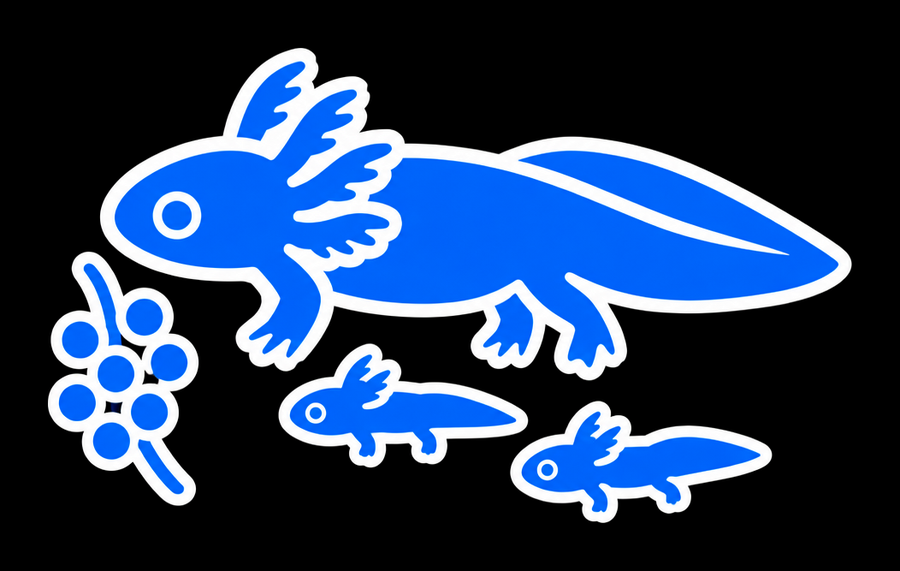
Axolotls breed via external fertilisation, with females laying up to several hundred eggs after a cooling period triggers spawning behaviour. Breeding at home requires dedicated cool, separate rearing tanks and is best left to experienced keepers.
 Species Information

| Scientific Name | Ambystoma mexicanum |
| Common Name | White (Leucistic) Axolotl |
| Origin | Lake Xochimilco, Mexico |
| Maximum Size | Up to 25-30cm (rare individuals to 45cm) |
| Lifespan | 10-15 years, some over 20 |
| Temperament | Peaceful but predatory; keep alone or with similarly sized axolotls only |
| Difficulty | Intermediate |
| Minimum Tank Size | 110 litres per axolotl |
| Recommended Tank Size | 150-180 litres or more |
| Diet | Carnivore - earthworms, bloodworm, sinking pellets |
| Water Temperature | 14-20°C, no heater (cool water essential) |
| pH Range | 6.5-8.0 |
| GH Range | Moderate |
| Salinity | Not applicable (freshwater) |
| Suitable For | Species-only aquatic setups |
| Reef Safe | Not applicable |
| Plant Safe | Yes, with tough species like Anubias and Java Fern - avoid fine substrates that could be ingested |
 Suitable Tank Mates

Other axolotls of a similar size only. Not recommended with fish, which can nip at gills or be eaten.
 Avoid Keeping With

Any fish (nippy or otherwise), smaller or larger axolotls that create a size mismatch, and warm-water species of any kind.
Check compatibility
Axolotls are best kept on their own or with other axolotls of a similar size. They will eat anything small enough to swallow, including fish and shrimp, and many fish will nip their feathery gills. Young axolotls can bite each other too, so keep similar sizes together with plenty of space and hiding spots.
 Is your tank ready?

Keep it cool
Axolotls need cool water and no heater. Check the Temperature tile on this page for the range, and never let the tank go above 22°C. If your room gets warm in summer, plan for a fan or an aquarium chiller (a unit that cools the water) before you buy.
Tank size for the adult
Around 75 L is the minimum for one adult, and a 90 cm tank or larger is better. Allow more room for two.
Cycle first
Your tank needs an established nitrogen cycle before your axolotl goes in. This is the build-up of good bacteria that turns waste into safer compounds, and it takes a few weeks to get going in a new tank.
Sand or a bare bottom
Use fine sand or a bare base. Never use gravel, which axolotls can swallow. Keep the filter gentle with low flow, and choose smooth decor, as their skin is soft and easily damaged.
Dechlorinate every time
Always treat tap water with a dechlorinator. Chlorine and chloramine harm an axolotl's skin, which absorbs substances straight from the water.
 Delivery options

Where we ship
We are based in Brisbane and ship live fish and corals to most of Australia. Some states have import rules that may affect what we can send and the cost.
- Western Australia: Import requirements and fees may apply. Read first.
- Tasmania: Import requirements and fees may apply. Read first.
- Northern Territory: May require a permit and be subject to quarantine.
- Regional and remote areas: Carrier options can be limited, which may affect service and transit time.
If you are unsure we can reach your location, please contact us before ordering.
Airport to Airport (Toll Air Express)
Air freight from our local airport to your destination airport.
- Cost: $100
- Transit: Up to 16 hours
- DOA cover: Yes
- Dispatch: Thursday night for Friday airport pickup. Order by Thursday.
Priority Same Day Airport to Airport
Fast air freight from our local airport to your destination airport, available on request.
- Cost: $185
- Transit: Up to 12 hours
- DOA cover: Yes
- Dispatch: Monday to Thursday. Contact us to arrange.
Door to Door (Toll Priority)
We collect from our store and deliver directly to your address.
- Cost: $100
- Transit: 24 to 48 hours
- DOA cover: No
- Dispatch: Order by 6am on the day of dispatch. Orders after this cut off move to the next dispatch day.
Star Track Priority (Door to Door)
Combined road and air freight, delivered to your door.
- Cost: $55
- Transit: 24 to 72 hours
- DOA cover: No
- Dispatch: Monday, Tuesday and Wednesday. Order by 10am on the day of dispatch.
A note on timing: All transit times are estimates and can vary with your location, the weather, and carrier schedules. Regional and remote areas may take longer. To give your livestock the safest trip, please order early in the week.
 Packed Safe

Bagged in water
Your axolotl travels in its own sealed bag of clean water with a charge of pure oxygen, packed upright in an insulated foam box to hold the temperature steady.
Kept cool
Axolotls are stressed by warm water, so we pack to the forecast for your delivery route and add cool packs in hot weather.
When your box arrives
Open it promptly and follow the Acclimation steps below. If something has gone wrong in transit, take photos of the unopened bag straight away and see the Arrive Alive Guarantee row below.
 Arrive Alive Guarantee

Arrive Alive Guarantee
Axolotls are covered by our Arrive Alive Guarantee when they are sent by air freight. There is no cover on Australia Post, Star Track or road freight.
Dead on Arrival (DOA)
If your axolotl arrives dead, take clear photos or video of it in the sealed, unopened inner bag. Send your claim by email or text message within 4 hours of receiving your order. Claims by Facebook Messenger or phone cannot be accepted. Include your name, order number, the approximate time you received it and how many animals are affected.
Death After Arrival (DAA)
Cover extends up to 12 hours after airport pickup. Send clear photos or video within 24 hours of delivery. Your axolotl must have been properly acclimated, and we may ask for a dated photo of a water test.
If your claim is approved
We will offer store credit or a replacement of the same item, subject to availability. Replacement shipping is covered only if more than half of your order arrives dead. Shipping charges and fees are not refunded.
To keep your cover valid
Be at the airport or at home to receive your order, and collect it promptly. Animals left unattended, returned to a depot or collected late may lose their cover.
Full terms: see our Guarantees & Policies page (section 2).
 Quarantine

Why quarantine
Keeping a new axolotl in its own tank for the first few weeks protects any axolotls you already have, and lets you check it is eating and settling in before it joins them.
How to do it
Set up a separate cool tank with dechlorinated water. Use a separate net, and wash your hands between tanks. Check that it eats well and moves normally, and look over its gills and skin for any change.
 Acclimation

Acclimation means slowly getting your axolotl used to your tank water. For axolotls the most important part is temperature.
Before you start
Check your tank with a thermometer and make sure it is within the range on this page. Have a clean cup, a clean bucket, a soft net and freshly prepared dechlorinated water at the same cool temperature ready. Turn off the tank lights and dim the room, as axolotls are sensitive to light.
Step by step
- Float the sealed bag in your tank for around 15 minutes to start matching the temperature.
- Open the bag and gently pour the axolotl and its transport water into the bucket.
- Add roughly one cup of tank water to the bucket every 5 minutes for around 45 to 60 minutes. Keep checking the bucket and make sure it stays below 20°C.
- Gently net the axolotl into the tank. Never lift it by hand. Support it fully in a net, or wet your hands thoroughly before any contact.
- Throw out all the bag and bucket water, and top the tank up with freshly prepared, cool, dechlorinated water.
After it goes in
Keep the lights off or very low for the rest of the day, and do not feed until the next day.
Full details: see our Acclimation Guide.
Complete the setup
Everything your new arrival needs from day one