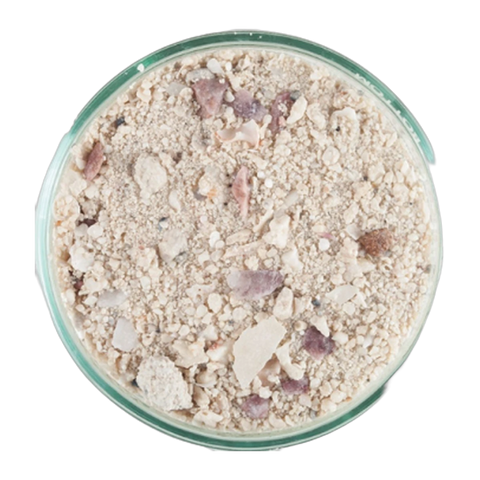
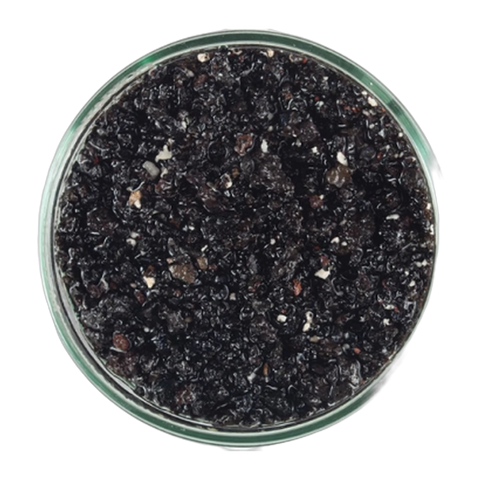
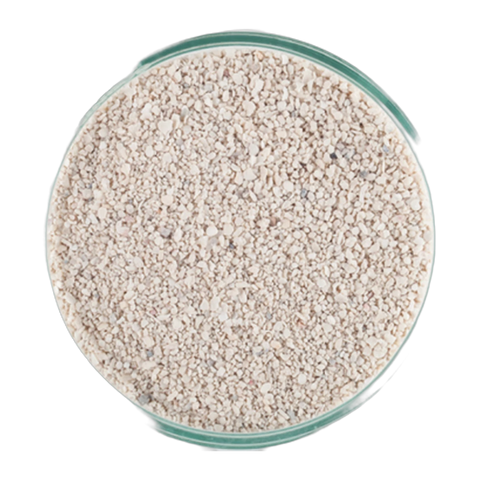
Eco-Complete Planted Black 20lb (9.072kg)

Pack size
20 lb (9.072 kg) bag
Water type
Freshwater
Part no.
CS0770
Delivery
Heavy
Cost per kg
$8.81
Grain size
0.25 to 7.0 mm
Bag covers
Tanks of 38 to 76 L
Rinse needed
No rinse needed
Eco-Complete Planted Black 20lb (9.072kg)
A mineral-rich black bed that feeds roots without touching your pH. CaribSea Eco-Complete Planted Black is a volcanic basalt planted-aquarium substrate supplied damp in a 20 lb (9.072 kg) bag, with a grain size of 0.25 to 7.0 mm. CaribSea describes it as a rich basaltic volcanic base containing iron, calcium, magnesium, potassium, sulphur plus over 25 other elements, and states it is nitrate and carbonate free and will not increase pH or carbonate hardness in the long term. That last point is what separates it from an aragonite substrate and from an active aqua soil: it feeds plants through the roots and otherwise leaves your water chemistry where it is.
Key features
- Basaltic volcanic mineral base - iron, calcium, magnesium, potassium and sulphur plus over 25 other elements, available at the root rather than needing to be dosed into the water.
- Will not raise pH or carbonate hardness - CaribSea states the substrate is nitrate and carbonate free, and supplies calcium without raising pH. It suits soft-water and CO2-injected tanks that an aragonite gravel would ruin.
- 0.25 to 7.0 mm mixed grade - the fine fraction gives carpeting plants and shrimp something to work with, while the coarser fraction keeps the bed open enough for roots and water movement.
- Live heterotrophic bacteria in the bag - CaribSea includes them to convert fish waste into food for the plants, and they shorten the cycling of a new tank.
- No rinsing - it is packed in CaribSea's Liquid Amazon buffered blackwater conditioning solution, and rinsing would discard both that and the bacteria.
- No dyes, paints or coatings - CaribSea states the colour is the mineral itself, so there is no coating to wear off individual grains.
How much do I need?
The table gives the weight of Eco-Complete Planted Black and the number of 9.072 kg bags for common Australian tank footprints, worked from CaribSea's published bulk density of 54 lb per cubic foot (0.87 kg per litre of bed).
| Tank footprint | 2.5 cm bed | 5 cm bed | 7.5 cm bed |
|---|---|---|---|
| 60 x 30 cm | 3.9 kg - 1 bag | 7.8 kg - 1 bag | 11.7 kg - 2 bags |
| 90 x 38 cm | 7.4 kg - 1 bag | 14.8 kg - 2 bags | 22.2 kg - 3 bags |
| 120 x 45 cm | 11.7 kg - 2 bags | 23.4 kg - 3 bags | 35.0 kg - 4 bags |
| 150 x 60 cm | 19.5 kg - 3 bags | 38.9 kg - 5 bags | 58.4 kg - 7 bags |
| 180 x 60 cm | 23.4 kg - 3 bags | 46.7 kg - 6 bags | 70.1 kg - 8 bags |
A note on CaribSea's own figure
CaribSea's published guidance is 2 lb of substrate per US gallon of tank volume. On a 60 x 30 x 36 cm tank that works out at roughly 15 kg, which is close to a 10 cm bed.
That is deeper than most planted tanks need. A working range is 5 cm at the front rising to 7.5 cm at the back, which gives rooted stems and swords enough to hold onto without burying the tank in substrate. The table above is built on depth rather than tank volume for that reason.
How these figures are worked out
Bed volume is the tank footprint multiplied by the depth you want, and the weight is that volume multiplied by CaribSea's published density. Bag counts are rounded up to the next whole bag. Hardscape sitting on the glass displaces substrate, so a rock-heavy iwagumi needs a little less than the table says, and a sloped bed should be worked out from the average depth rather than the deepest point.
Specifications
| Grain size | 0.25 to 7.0 mm |
|---|---|
| Bag weight | 20 lb (9.072 kg) |
| Bulk density | 54 lb per cubic foot (0.87 kg per litre) |
| Bed volume per bag | Approximately 10.5 litres |
| Colour | Black |
| Material | Basaltic volcanic mineral base, supplied damp in Liquid Amazon solution |
| Effect on water | Nitrate and carbonate free; will not raise pH or carbonate hardness long term |
| Rinsing | Not required, and not recommended |
| Water type | Freshwater - planted, community and shrimp aquariums |
| Supplier code | CS0770 |
Which Eco-Complete Planted grade do I need?
| Grade | Grain size | Base material | Bulk density | Best for |
|---|---|---|---|---|
| Eco-Complete Planted Black | 0.25 to 7.0 mm | Basaltic volcanic | 54 lb/cu ft | Carpeting plants, shrimp and any scape wanting a dark base; the wider grade with a genuine fine fraction |
| Eco-Complete Planted Red | 3.0 to 6.0 mm | Laterite | 54 lb/cu ft | Heavy root feeders and warm-toned scapes; coarser and more uniform, so it resists compaction |
Both are the same density, so a bed of either depth costs the same number of bags. The choice is grain size, colour and base material rather than quantity.
What it does, and what it does not do
Eco-Complete is a mineral substrate, not an active aqua soil. The practical consequences are worth knowing before you buy.
What it does: it puts iron and trace minerals in the root zone, holds them there, and keeps supplying them for years without a recharge. It does not leach ammonia when flooded, so there is no waiting period before livestock can go in, and it will not crash your KH the way an active soil does.
What it does not do: because it is nitrate free, it contains no nitrogen and no phosphate. Fast-growing stems still need a water column fertiliser such as Seachem Flourish, and a high-light CO2 tank will need nitrogen and phosphorus dosed as well. It also will not soften your water or drop pH, so if you are chasing blackwater parameters for wild caught fish this is not the substrate that gets you there.
Suitable for, and not suitable for
Suitable for: planted community aquariums; carpeted foreground scapes where the fine fraction helps small plants root; shrimp tanks, where the mineral content is useful and the pH neutrality is essential; low-tech tanks that would rather not have a soil to replace in two years; anyone who wants plant growth without changing their water chemistry.
Not suitable for: African Rift Lake cichlid tanks, which need the pH and carbonate hardness that Eco-Complete Black Cichlid supplies and this deliberately does not. It is also not a replacement for an active soil if your goal is to actively lower pH and KH, and it will not feed a demanding high-tech tank on its own.
Setting it up
- Put the substrate into an empty tank and pour in the liquid from the bag with it - that is the Liquid Amazon conditioner and the bacterial culture.
- Slope it from about 5 cm at the front to 7.5 cm at the back, then place hardscape directly on the glass so it cannot subside.
- Fill slowly onto a plate or a bag laid on the substrate. The 0.25 mm fines will cloud the tank badly if you pour straight onto the bed.
- Plant into a partially filled tank if you can - it is far easier to place fine-stemmed plants with a few centimetres of water than with a full column.
- Run filtration. Cloudiness from the fines clears over the following day or two.
Care and maintenance
Do not gravel-vacuum a planted bed. Hover the siphon above the surface to lift loose detritus and leave the root zone alone, because that is where the mineral content and the plant roots are.
The substrate does not exhaust on a schedule the way an active soil does, and there is no replacement interval. In a heavily rooted tank, root tabs pushed under swords and crypts after a couple of years will do more than replacing the bed.
One thing to watch with a 0.25 to 7.0 mm mixed grade: the fines gradually work downward and the coarse fraction ends up on top. That is cosmetic rather than a problem, but it means a freshly laid bed looks slightly different to a two-year-old one.
Goes well with
- Seachem Flourish - a water column trace supplement, which pairs with the substrate rather than duplicating it, since Eco-Complete supplies nothing to the water.
- Seachem Flourish Excel - a carbon source for tanks running without pressurised CO2.
- Dragon Stone Freshwater Rock - pale pitted rock that reads strongly against a black substrate.
- CaribSea Eco-Complete Planted Red - the coarser laterite-based grade if you want a warmer-toned bed.
Warranty and delivery
CaribSea does not publish a warranty term for its substrates. Your rights under the Australian Consumer Law apply regardless, and are not limited by anything the manufacturer does or does not offer.
Each bag weighs 9.072 kg. A 120 x 45 cm tank at 7.5 cm depth is four bags, around 36 kg, so check the freight total before ordering a full bed.
Common questions
Does CaribSea Eco-Complete Planted Black change pH?
No. CaribSea states the substrate is nitrate and carbonate free and will not increase pH or carbonate hardness in the long term, and that it supplies calcium without raising pH. It is a mineral substrate rather than a buffering one, which is why it suits soft-water and CO2-injected planted tanks.
Do I need to rinse it first?
No. It is supplied damp in CaribSea's Liquid Amazon conditioning solution along with live heterotrophic bacteria, and rinsing would remove both. Tip the bag and its liquid straight into the tank.
Do I still need fertiliser?
Yes, for anything beyond a low-light tank. Eco-Complete is nitrate free, so it contains no nitrogen and no phosphate. It supplies iron and trace minerals at the root; nitrogen, phosphorus and water column traces still need dosing in a tank with fast-growing stems.
Can I use it in a shrimp tank?
Yes. It does not alter pH or carbonate hardness, which is what matters most for shrimp, and the 0.25 mm fine fraction gives them a surface they can graze and sift. Match your water parameters to the species rather than expecting the substrate to set them.
How is it different from an aqua soil?
An active aqua soil actively lowers pH and KH, contains organic nutrients including nitrogen, leaches ammonia when first flooded, and breaks down over roughly two years. Eco-Complete does none of those things: it is inert mineral rock that holds iron and trace elements, needs no waiting period, and does not need replacing.
Can I put it over or under another substrate?
You can cap it or use it as a cap, but a 0.25 to 7.0 mm mixed grade will migrate into a layer of very different grain size over time. If you want a defined two-layer bed, choose materials with similar grain sizes so flow and digging do not blend them.