Eco-Complete Planted Red 20lb (9.072kg)

Pack size
20 lb (9.072 kg) bag
Water type
Freshwater
Part no.
CS0771
Delivery
Heavy
Cost per kg
$8.81
Grain size
3.0 to 6.0 mm
Bag covers
Tanks of 38 to 76 L
Rinse needed
No rinse needed
Eco-Complete Planted Red 20lb (9.072kg)
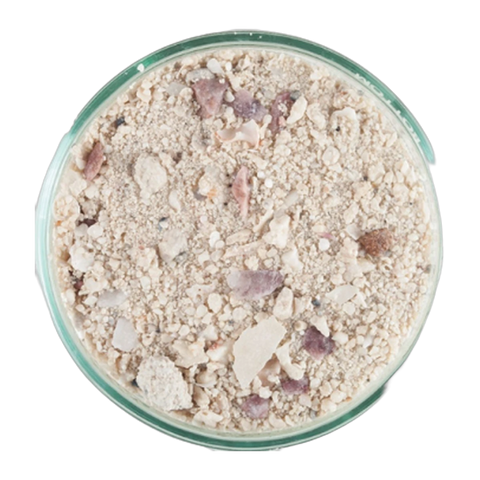
Laterite in the bed, so you never have to layer it in yourself. CaribSea Eco-Complete Planted Red is a laterite-based planted-aquarium substrate supplied damp in a 20 lb (9.072 kg) bag, with a grain size of 3.0 to 6.0 mm. Laterite is the iron-bearing clay that planted-tank keepers used to buy separately and bury under their gravel; here it is the substrate itself, which is why CaribSea states the iron-rich red grade eliminates the need for laterite. Like the black grade it is nitrate and carbonate free and will not raise pH or carbonate hardness, so it feeds roots without moving your water chemistry.
Key features
- Laterite based and iron rich - the iron-bearing clay is the substrate rather than a layer buried beneath it, so there is no separate laterite to add and nothing to disturb when you replant.
- Will not raise pH or carbonate hardness - CaribSea states the substrate is nitrate and carbonate free. It suits soft-water and CO2-injected tanks where an aragonite gravel would be the wrong call.
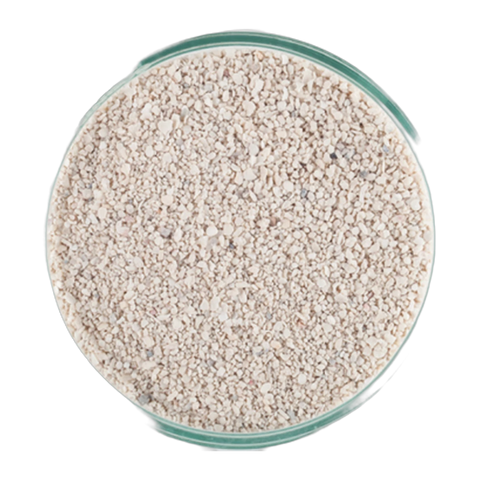
- 3.0 to 6.0 mm uniform grade - a narrow size range with no fine fraction, so the bed stays open, drains freely between grains and does not compact around roots.
- Live heterotrophic bacteria in the bag - CaribSea includes them to convert fish waste into food for the plants and to shorten the cycling of a new tank.
- No rinsing - packed in CaribSea's Liquid Amazon buffered blackwater conditioning solution, which rinsing would wash away along with the bacteria.
- Warm red tone, no dyes - CaribSea states its Eco-Complete substrates use no artificial dyes, paints or coatings, so the colour is the mineral itself.
How much do I need?
The table gives the weight of Eco-Complete Planted Red and the number of 9.072 kg bags for common Australian tank footprints, worked from CaribSea's published bulk density of 54 lb per cubic foot (0.87 kg per litre of bed).
| Tank footprint | 2.5 cm bed | 5 cm bed | 7.5 cm bed |
|---|---|---|---|
| 60 x 30 cm | 3.9 kg - 1 bag | 7.8 kg - 1 bag | 11.7 kg - 2 bags |
| 90 x 38 cm | 7.4 kg - 1 bag | 14.8 kg - 2 bags | 22.2 kg - 3 bags |
| 120 x 45 cm | 11.7 kg - 2 bags | 23.4 kg - 3 bags | 35.0 kg - 4 bags |
| 150 x 60 cm | 19.5 kg - 3 bags | 38.9 kg - 5 bags | 58.4 kg - 7 bags |
| 180 x 60 cm | 23.4 kg - 3 bags | 46.7 kg - 6 bags | 70.1 kg - 8 bags |
Go deeper with this grade than you would with a fine one
A 3.0 to 6.0 mm grain needs depth to hold a plant upright. Read the 7.5 cm column for a rooted tank with swords, crypts or vallisneria, because at 2.5 cm a newly planted stem simply lifts out. The 2.5 cm figures are there for a shallow decorative bed rather than a planted one.
CaribSea's own published guidance is 2 lb per US gallon of tank volume, which on a 60 x 30 x 36 cm tank comes to roughly 15 kg, or about a 10 cm bed. That is generous even for root feeders; 5 to 7.5 cm is the working range most planted tanks settle on.
How these figures are worked out
Bed volume is the tank footprint multiplied by the depth you want, and the weight is that volume multiplied by CaribSea's published density. Bag counts are rounded up to the next whole bag. Hardscape sitting on the glass displaces substrate, and a sloped bed should be worked out from the average depth rather than the deepest point.
Specifications
| Grain size | 3.0 to 6.0 mm |
|---|---|
| Bag weight | 20 lb (9.072 kg) |
| Bulk density | 54 lb per cubic foot (0.87 kg per litre) |
| Bed volume per bag | Approximately 10.5 litres |
| Colour | Red |
| Material | Laterite based, supplied damp in Liquid Amazon solution |
| Effect on water | Nitrate and carbonate free; will not raise pH or carbonate hardness long term |
| Rinsing | Not required, and not recommended |
| Water type | Freshwater - planted and community aquariums |
| Recommended bed depth | 5 to 7.5 cm for rooted plants |
| Supplier code | CS0771 |
Which Eco-Complete Planted grade do I need?
| Grade | Grain size | Base material | Bulk density | Best for |
|---|---|---|---|---|
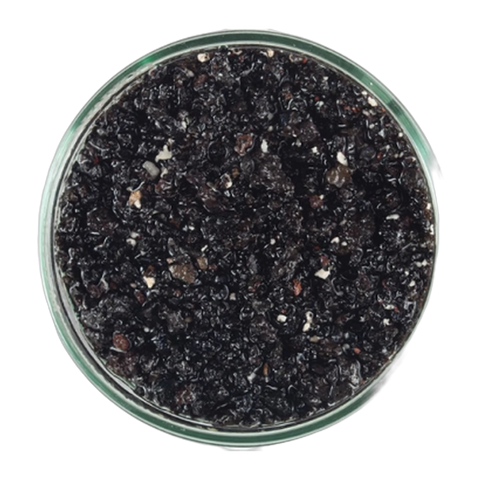
| Eco-Complete Planted Black | 0.25 to 7.0 mm | Basaltic volcanic | 54 lb/cu ft | Carpeting plants, shrimp and any scape wanting a dark base; the wider grade with a genuine fine fraction |
| Eco-Complete Planted Red | 3.0 to 6.0 mm | Laterite | 54 lb/cu ft | Heavy root feeders and warm-toned scapes; coarser and more uniform, so it resists compaction |
Both grades share a density, so either one costs the same number of bags for the same bed depth. The decision is grain size, colour and base material, not quantity.
Where the coarse grade helps, and where it hurts
The 3.0 to 6.0 mm size is the whole character of this substrate, and it cuts both ways.
It helps heavy root feeders. Amazon swords, crypts and vallisneria put down thick root systems that want an open bed with water moving between the grains, and a uniform coarse grade never compacts into the airless mat a very fine sand can become. Replanting is also easier: a coarse bed parts around your fingers and closes again.
It hurts small foreground plants. Dwarf hairgrass, Monte Carlo and other carpeting species have fine roots that struggle to grip a 3 to 6 mm grain, and newly planted runners float free. If a carpet is the point of the scape, Eco-Complete Planted Black runs down to 0.25 mm and is the better choice. Uneaten food also drops into the gaps in a coarse bed, so feed to what the fish actually eat.
Suitable for, and not suitable for
Suitable for: planted tanks built around rooted species - swords, crypts, vallisneria and other heavy root feeders; Dutch-style and jungle scapes; community aquariums where a warm-toned bed suits the fish; low-tech planted tanks that want the substrate to keep working for years without a recharge.
Not suitable for: carpeted foreground scapes, where the grain is too coarse for fine roots to hold; African Rift Lake cichlid tanks, which need the pH and carbonate hardness that Eco-Complete Cichlid Gravel supplies and this deliberately does not; and any setup where you are trying to actively lower pH and KH, which is a job for an active aqua soil rather than an inert mineral substrate.
Setting it up
- Put the substrate into an empty tank and pour in the liquid from the bag with it - that is the Liquid Amazon conditioner and the bacterial culture.
- Build to at least 5 cm, ideally 7.5 cm at the back, then set hardscape directly on the glass so it cannot subside as plants are worked in around it.
- Fill slowly onto a plate or a bag. A coarse grade clouds far less than a fine one, but a hard pour still craters the bed.
- Plant deep. Push rooted plants further into a coarse bed than feels necessary, then firm the substrate around the crown so they do not lift.
Care and maintenance
Unlike a coarse cichlid gravel, do not drive a vacuum into a planted bed. Hover the siphon above the surface and lift what is loose, leaving the root zone and its iron content undisturbed.
Because waste drops into the gaps of a 3 to 6 mm bed, the honest counterweight is feeding discipline and decent flow across the substrate rather than aggressive cleaning. Plants use a good deal of what settles.
There is no replacement interval. Laterite does not exhaust the way an organic soil does, and in a mature tank root tabs pushed under the heaviest feeders after a few years are more useful than a rebuild.
Goes well with
- Seachem Flourish - water column traces, which the substrate does not provide; Eco-Complete is nitrate free and works at the root only.
- Seachem Flourish Excel - a carbon source for planted tanks running without pressurised CO2.
- Dragon Stone Freshwater Rock - earthy pitted rock that sits naturally with a red laterite bed.
- CaribSea Eco-Complete Planted Black - the finer, darker grade if you need a carpet to root.
Warranty and delivery
CaribSea does not publish a warranty term for its substrates. Your rights under the Australian Consumer Law apply regardless, and are not limited by anything the manufacturer does or does not offer.
Each bag weighs 9.072 kg. Because this grade wants a deeper bed than a fine substrate, budget from the 7.5 cm column - a 120 x 45 cm tank at that depth is four bags, around 36 kg.
Common questions
Do I still need to add laterite?
No. CaribSea states the iron-rich red grade eliminates the need for laterite, because laterite is the base material of the substrate rather than a separate layer buried underneath it.
Will Eco-Complete Planted Red change my pH?
No. CaribSea states the substrate is nitrate and carbonate free and will not increase pH or carbonate hardness in the long term. It adds minerals at the root without acting on the water chemistry.
Can I grow a carpet in it?
Not easily. At 3.0 to 6.0 mm the grain is too coarse for the fine roots of dwarf hairgrass or Monte Carlo to grip, and newly planted runners tend to lift. Use Eco-Complete Planted Black, which runs down to 0.25 mm, if a carpet is the goal.
Does it need rinsing before it goes in?
No. It is supplied damp in CaribSea's Liquid Amazon conditioning solution with live heterotrophic bacteria. Tip the bag and its liquid straight into the tank.
Do I still need fertiliser?
Yes, in most tanks. The substrate is nitrate free, so it holds no nitrogen and no phosphate. It supplies iron and minerals to the roots; nitrogen, phosphorus and water column traces still need dosing wherever plants are growing quickly.
Does the red colour clash with green plants?
It is a warm earthy red rather than a bright one, and it reads as soil under a densely planted tank. It is more visible in a sparsely planted scape, so if you want the substrate to disappear behind the plants, the black grade does that more reliably.
How deep does the bed need to be?
5 to 7.5 cm for a rooted planted tank. A coarse grain needs depth to hold a plant, and anything shallower than 5 cm will let newly planted stems and crowns work loose.