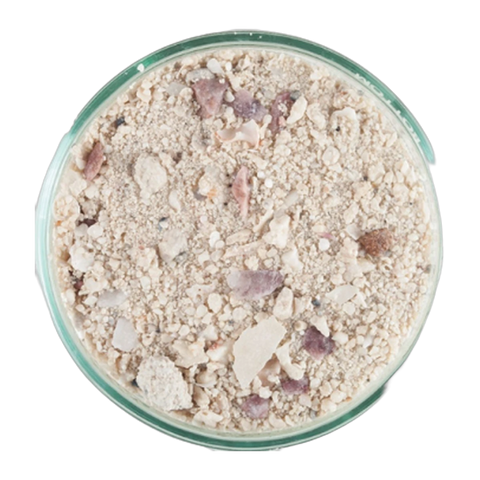
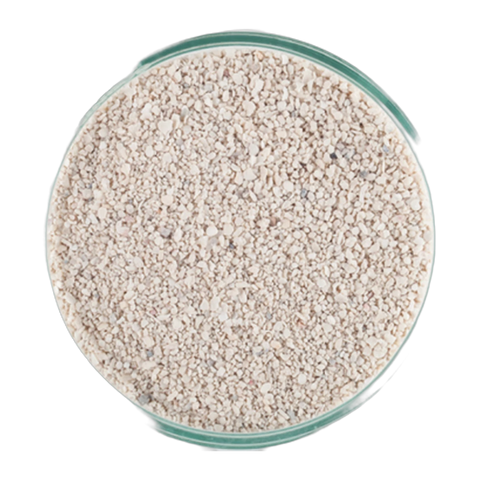
Eco-Complete White Cichlid 20lb (9.072kg)

Pack size
20 lb (9.072 kg) bag
Water type
Freshwater
Part no.
CS0778
Delivery
Heavy
Eco-Complete White Cichlid 20lb (9.072kg)
A bright white bed that holds Rift Lake pH up on its own. CaribSea Eco-Complete White Cichlid is an aragonite-based African cichlid sand supplied damp in a 20 lb (9.072 kg) bag at a fine grain of 1.0 to 2.0 mm. It is packed in a water conditioning solution with live bacteria, so it goes straight into the tank without rinsing. Because it is aragonite it adds calcium, magnesium and carbonate to the water and holds pH and carbonate hardness up - which is what Malawi, Tanganyika and Victorian cichlids want, and what a planted or soft-water tank does not.
Key features
- Fine 1.0 to 2.0 mm grain - small enough for sand-sifting and shell-dwelling species to pick through and excavate properly, rather than shoving gravel around.
- Aragonite based - it releases calcium, magnesium and carbonate, and CaribSea states it buffers automatically for the life of the aquarium.
- Live bacteria in the bag - supplied damp and biologically active, which shortens the time a new bed takes to start processing ammonia.
- No rinsing - the bag liquid is a water conditioning solution that deals with chlorine and chloramine. Rinsing pours away both the conditioner and the bacteria.
- 54 lb per cubic foot - a light grade at roughly 0.87 kg per litre of finished bed, so one 9.072 kg bag lays about 10.5 litres of sand.
- Bright white throughout - it lifts light back into the tank and makes blue and yellow Malawi haps read hard against it.
How much do I need?
This is the question a substrate page has to answer. The table gives the weight of Eco-Complete White Cichlid and the number of 9.072 kg bags for common Australian tank footprints, worked from CaribSea's published density of 54 lb per cubic foot (0.87 kg per litre of bed).
| Tank footprint | 2.5 cm bed | 5 cm bed | 7.5 cm bed |
|---|---|---|---|
| 60 x 30 cm | 3.9 kg - 1 bag | 7.8 kg - 1 bag | 11.7 kg - 2 bags |
| 90 x 38 cm | 7.4 kg - 1 bag | 14.8 kg - 2 bags | 22.2 kg - 3 bags |
| 120 x 45 cm | 11.7 kg - 2 bags | 23.4 kg - 3 bags | 35.0 kg - 4 bags |
| 150 x 60 cm | 19.5 kg - 3 bags | 38.9 kg - 5 bags | 58.4 kg - 7 bags |
| 180 x 60 cm | 23.4 kg - 3 bags | 46.7 kg - 6 bags | 70.1 kg - 8 bags |
What depth should I actually pick?
For a fine sand, 2.5 to 5 cm is the working range. That is deep enough for shell dwellers to bury a shell and for sand sifters to work, and shallow enough that you can turn the whole bed over with a siphon at water changes.
Deep sand beds belong in marine sumps, not in a Rift Lake display. A fine grain packs tightly, so anything past about 7.5 cm in freshwater tends to go anaerobic in the lower layer where you cannot reach it.
Two adjustments to the table. Rockwork placed on the glass displaces sand, so a heavily scaped Tanganyikan tank needs a little less than the figures say. A bed that slopes front to back should be worked out on its average depth, not its deepest point.
Specifications
| Grain size | 1.0 to 2.0 mm typical |
|---|---|
| Bag weight | 20 lb (9.072 kg) |
| Bulk density | 54 lb per cubic foot (0.87 kg per litre) |
| Bed volume per bag | Approximately 10.5 litres |
| Colour | White |
| Material | Aragonite based, supplied damp in a water conditioning solution |
| Effect on water | Raises pH and carbonate hardness, and continues buffering |
| Rinsing | Not required, and not recommended |
| Water type | Freshwater - African Rift Lake and other hard, alkaline setups |
| Supplier code | CS0778 |
A note on the published grain size
CaribSea's 2025 catalogue lists this product at 1.0 to 2.0 mm, while the company's website lists 0.5 to 1.5 mm for the same item number. We have used the catalogue figure above because it is the more recent published specification. Both describe a fine sand rather than a gravel, and neither changes how the bed behaves or how much you need.
Which Eco-Complete African Cichlid grade do I need?
| Grade | Grain size | Density | Colour | Best for |
|---|---|---|---|---|
| Eco-Complete White Cichlid | 1.0 to 2.0 mm | 54 lb/cu ft | White | A bright bed that reflects light and shows fish colour hardest |
| Eco-Complete Cichlid Sand | 0.5 to 1.5 mm | 92 lb/cu ft | Natural | The finest and densest grade - stays put best under heavy diggers |
| Eco-Complete Cichlid Gravel | 4.0 to 10.0 mm | 72 lb/cu ft | Natural | Coarse natural-toned bed where you want gaps rather than sand |
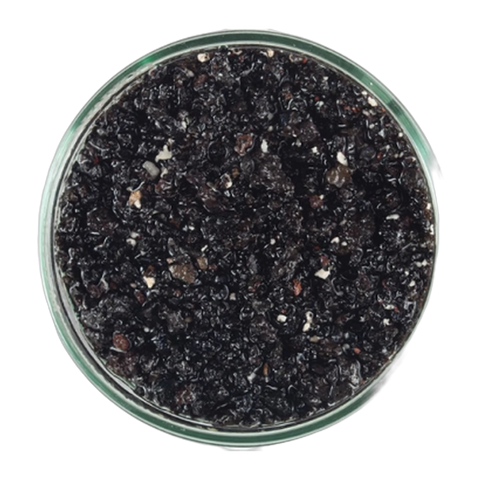
| Eco-Complete Black Cichlid | 4.0 to 10.0 mm | 54 lb/cu ft | Black | Coarse grade in black, for a dark tank rather than a bright one |
White sand, honestly
A white bed is the highest-contrast option in the range and it is also the least forgiving one. Everything that lands on it is visible: uneaten pellets, faeces, a dusting of diatoms in a new tank.
That is not a fault in the product. It is the trade-off you accept for the light it throws back into a deep Malawi tank. Practically, it means a white bed rewards a fortnightly siphon and punishes over-feeding faster than a natural or black grade does.
Diatoms - the brown film that appears on most new setups in the first month or two - show up strongly on white and then fade as the tank matures. They are a stage, not a problem with the sand.
Suitable for, and not suitable for
Suitable for: Lake Malawi, Lake Tanganyika and Lake Victoria cichlid aquariums; Tanganyikan shell dwellers, which need a fine grain they can actually dig; sand-sifting species that pass substrate through their gills; and any hard-water freshwater tank where pH drifts down between water changes and you would rather it did not.
Not suitable for: planted aquariums, soft-water community tanks, blackwater and Amazonian setups, shrimp tanks, and discus or apistogramma systems. Aragonite raises pH and carbonate hardness and there is no way to switch that off. For a planted tank use Eco-Complete Planted Black, which is carbonate free.
Setting it up
- Put the sand into an empty tank and tip the bag liquid in with it - that liquid is the water conditioner and the bacterial culture, not packing water.
- Level it, then set rockwork and shells down on the glass wherever you can, so nothing topples when a fish tunnels underneath.
- Fill slowly onto a plate or a flat bag laid on the sand. Fine grains lift easily and a hose pointed straight at the bed will cloud the tank for a day.
- Run filtration and expect some haze. It clears as the filter catches the fines.
Care and maintenance
Fine sand is serviced differently to gravel. Waste sits on the surface rather than falling into the bed, so you hover the siphon just above the sand and draw the debris off rather than plunging in and vacuuming the substrate away.
Stir the bed lightly every few weeks in areas that stay undisturbed, particularly under rockwork shadows and in back corners where flow does not reach. Sand-sifting cichlids do most of this for you.
The buffering capacity is used up extremely slowly as aragonite dissolves, so there is no replacement schedule. Top up if the depth drops noticeably over several years.
Goes well with
- CaribSea Eco-Complete Cichlid Sand - the natural-toned fine grade, if you want to break a white bed with a darker foreground.
- Mountain Stone Freshwater Rock 11kg - pale, layered stone that stacks into Malawi-style terraces and reads well against white.
- Dragon Stone Freshwater Rock 11kg - heavily pitted rock that makes natural caves and territory breaks for mbuna.
Warranty and delivery
CaribSea does not publish a warranty term for its substrates. Your rights under the Australian Consumer Law apply regardless and are not limited by anything the manufacturer does or does not offer.
Each bag is 9.072 kg. A 150 x 60 cm tank at 5 cm depth is five bags, close to 45 kg, so check the freight total before ordering a full bed.
Common questions
Do I need to rinse CaribSea Eco-Complete White Cichlid before use?
No. It is supplied damp in a water conditioning solution with live bacteria, and CaribSea's instruction is to place the contents straight into the aquarium. Rinsing removes both the conditioner and the bacteria you paid for.
Will a white substrate stay white?
The grains themselves do not discolour, because the colour is the aragonite rather than a coating. What changes is what settles on top: diatom film in the first month or two of a new tank, then detritus between siphons. A fortnightly surface siphon keeps it looking as it did on day one.
How high will it push my pH?
Aragonite buffers against downward drift rather than driving pH to a fixed target, so where you land depends on your tap water, your carbonate hardness and how heavily the tank is stocked. It will hold a Rift Lake tank in the alkaline range and stop the slow acidification that otherwise happens between water changes.
Is it fine enough for shell dwellers?
Yes. At 1.0 to 2.0 mm it is a true sand, so Neolamprologus and Lamprologus shell dwellers can excavate under and around a shell the way they would in the lake. The coarse 4.0 to 10.0 mm grades in this range cannot be dug the same way.
Can I mix it with the black or natural grades?
You can, but they will not stay separate. Different grain sizes and densities migrate under fish activity and flow, so a two-tone bed blends within weeks unless a physical barrier such as rock or an acrylic divider holds the line.
Can I use it in a planted tank?
No. It raises pH and carbonate hardness, which suits Rift Lake cichlids and works against most aquarium plants. For a planted tank use Eco-Complete Planted Black, which is carbonate free and will not raise pH.