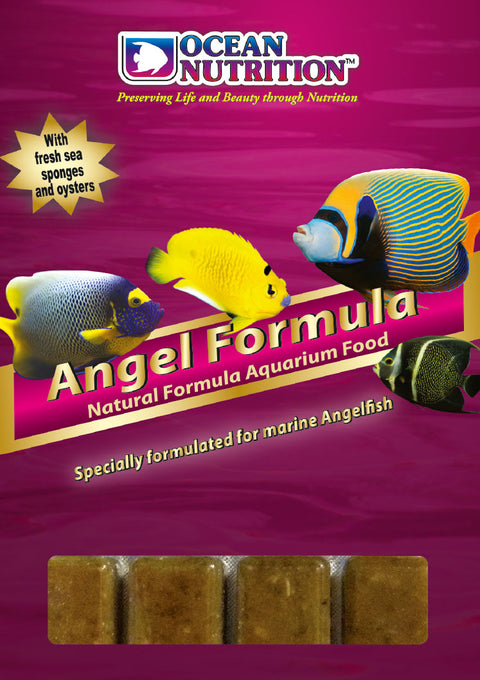
Frozen Nutris Krill Pacifica 100g


Pack size
100 g blister
Water type
Marine + Freshwater
Delivery
Cold chain - pickup or local delivery
Colour & specimen: This fish's colouration may look different in your own tank depending on your lighting, diet, stress levels and water conditions, and can vary between individual fish of the same species. You will not receive this exact fish pictured; the one you receive will be a similar size, colour and condition.
WA & TAS orders: state biosecurity regulations restrict which live animals can be sent to Western Australia and Tasmania — please check what we can send to you before ordering. See delivery info
Frozen Nutris Krill Pacifica 100g
Whole krill large enough that a fish sees it coming from across the tank. Ocean Nutrition Frozen Nutris Krill Pacifica is a 100 g blister of pre-portioned cubes holding whole Euphausia pacifica at 1.5 to 2.0 cm - by some distance the largest single organism in the Nutris frozen range. At 12.2% protein against 84% moisture it is also the richest, which makes this frozen krill a conditioning food for medium and large marine and freshwater fish rather than a daily staple for a community tank.
Key features
- 1.5 to 2.0 cm whole animals - the size decides the fish. This is a mouthful for a tang, a large cichlid or a trigger, and far too big for a tetra.
- 12.2% protein at 84% moisture - the highest protein and the lowest water content of Ocean Nutrition's single-species frozen blisters.
- Single-ingredient declaration - krill pacifica and nothing else. No binder, no added colour, no preservative named.
- High natural carotenoid pigment - krill is where the colour in a colour-enhancing food usually comes from in the first place.
- Whole, not minced - flash frozen intact so the shell holds the animal together and less leaches into the water.
- Cold-water Pacific harvest - Ocean Nutrition describes these as shrimp-like invertebrates collected in the cold waters of the Pacific Ocean.
- Takes reluctant feeders - a large, strongly scented item is often what gets a newly imported or off-food fish to eat.
Specifications
| Form | Whole frozen krill, blister cubes |
|---|---|
| Animal size | 1.5 to 2.0 cm |
| Species | Krill pacifica |
| Pack size | 100 g blister |
| Crude protein | 12.2% |
| Water type | Marine and freshwater |
| Suits | Medium to large fish and crustaceans |
| Feeding frequency | 2 to 5 times a day |
| Storage | Keep frozen until use |
| Refreezing | Never refreeze a thawed portion |
| Freight | Cold chain - in-store pickup or local delivery |
Which krill format do I need?
| Product | Format | Best suited to |
|---|---|---|
| Frozen Nutris Krill Pacifica 100g | Whole animals, pre-portioned cubes | One or two display tanks; fish large enough to take a 15 to 20 mm item whole |
| Frozen Krill Pacifica Flat 454g | Whole animals, 454 g slab | The same krill in bulk, for multiple tanks or heavy daily feeding |
| Ocean Nutrition Chopped Krill Pacifica | Chopped | Fish with mouths too small for a whole krill, and corals or invertebrates that need smaller pieces |
| Frozen Whole Krill Superba 100g | A different krill species, whole | An alternative krill where you want to vary the species rather than the size |
The choice on this page is almost entirely about mouth size. If the fish cannot swallow a 15 to 20 mm krill whole it will tear at it, drop most of it, and the remainder goes to the substrate - which is when the chopped version is the cheaper food in practice.
Ingredients and nutrition
Full ingredient declaration
Reproduced exactly as Ocean Nutrition publishes it: Krill pacifica.
That is the complete declaration. Krill are crustaceans, so the pack carries a crustacean allergen for anyone handling it. No artificial colours, preservatives, ethoxyquin, BHA or BHT are named, because nothing beyond the animal itself is named at all.
Analytical constituents
| Crude protein | 12.2% |
|---|---|
| Crude fat | 1.4% |
| Ash | 2.1% |
| Moisture | 84.0% |
Ocean Nutrition does not publish a crude fibre figure for this product, so none is shown here rather than estimated.
What 12.2% wet actually means
Frozen foods are analysed wet and dry foods are analysed dry, so the two figures cannot be read side by side. Sixteen per cent of this cube is solid matter.
Dividing the published protein by that solid fraction puts krill pacifica at roughly 76% protein on a dry-matter basis - the reason it is treated as a rich conditioning food and not fed at every meal.
Thawing, feeding and storage
Ocean Nutrition's direction is to feed 2 to 5 times a day, thawing the number of cubes required and offering only what the fish will clear within five minutes.
Press out the cubes you need into a small container and defrost them at room temperature, without water, for ten to fifteen minutes. Leave the rest of the blister in the freezer.
Rinsing thawed krill in a fine net before feeding removes the pack liquid. On a rich food like this one that liquid is worth removing, because it carries dissolved protein straight into your nitrate reading without feeding anything.
Target-feed with tweezers or a turkey baster if the tank has strong flow. A whole krill dropped into an unbaffled return current usually ends up behind the rockwork rather than in a fish.
Suitable for, and not suitable for
Suitable for
- Medium and large marine fish - tangs, angelfish, wrasses, triggers and puffers
- Large freshwater fish including oscars, adult cichlids, arowana and larger catfish
- Marine and freshwater crustaceans, which will take a whole krill and work at it
- Conditioning fish before breeding, and coaxing newly imported or off-food fish to start eating
- Anemones and large-polyp stony corals with a mouth wide enough to close over a whole krill
Not suitable for
- Small community fish - tetras, rasboras, guppies and similar cannot handle a 15 to 20 mm animal
- Fry, larvae and filter feeders, which need a food orders of magnitude smaller
- Use as a sole diet - a single-species krill diet is rich but narrow, and needs pairing with a mixed formula and something plant-based
- Small-polyp stony corals and non-photosynthetic filter feeders
- Automatic feeders, which cannot handle a frozen wet food
Goes well with
- Ocean Nutrition Chopped Krill Pacifica - the same krill in smaller pieces, for the fish in the tank that cannot manage a whole one.
- Frozen Marine Quintet 100g - a mixed marine blister to balance a single-species krill feed.
- Green Seaweed (Green Marine Algae) - the plant side of the diet for tangs and angels being fed krill.
- Frozen Mysis Flat 454g - a smaller frozen crustacean for the mid-size fish in a mixed community.
- Ocean Nutrition Formula One Marine Pellets - a shelf-stable staple for the days you are not running the freezer.
Warranty and delivery
Aquarium foods carry no manufacturer warranty period. Your rights under the Australian Consumer Law apply in full and sit in addition to anything a manufacturer offers, including a remedy if a product arrives thawed, damaged or not of acceptable quality.
This is a frozen product and is handled as cold-chain stock. It travels by in-store pickup or local delivery rather than standard parcel post, because a blister that thaws in transit cannot be refrozen.
Common questions
How big is Ocean Nutrition Krill Pacifica?
Ocean Nutrition publishes an animal size of 1.5 to 2.0 cm for Krill Pacifica, which makes it the largest single organism in its frozen blister range. That size is the main thing to check before buying, because a fish that cannot take it whole will waste most of it.
What is the difference between krill pacifica and krill superba?
They are two different krill species sold under their own names by Ocean Nutrition, and the practical difference for most aquarists is size and availability rather than nutrition. Pacifica is the one with a published 1.5 to 2.0 cm animal size, so it is the safer choice when you need to match a specific mouth size.
Can freshwater fish eat frozen krill?
Yes. Ocean Nutrition markets Krill Pacifica for both marine and freshwater fish as well as crustaceans, and large freshwater species such as oscars, adult cichlids and arowana take it readily. The limit is mouth size, not water type.
Does krill improve fish colour?
Krill contains high levels of natural carotenoid pigment, which is why it appears as an ingredient in so many colour-enhancing prepared foods. Feeding it supports the reds and oranges a fish is genetically able to show; it cannot add colour a fish does not have.
Should I thaw the cubes or drop them in frozen?
Thaw them. Ocean Nutrition's direction for the Nutris blister range is to thaw the required number of cubes first, and with an animal this large a frozen cube would simply sink as one lump before the fish could break it up.
How much should I feed at one time?
Offer only what the fish will finish within five minutes, fed 2 to 5 times a day according to Ocean Nutrition. Because this is a rich food at roughly 76% protein on a dry basis, most keepers use it as two or three feeds a week alongside a staple rather than at every feeding.