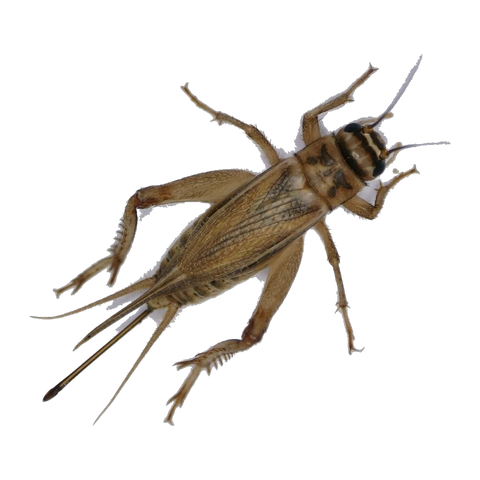
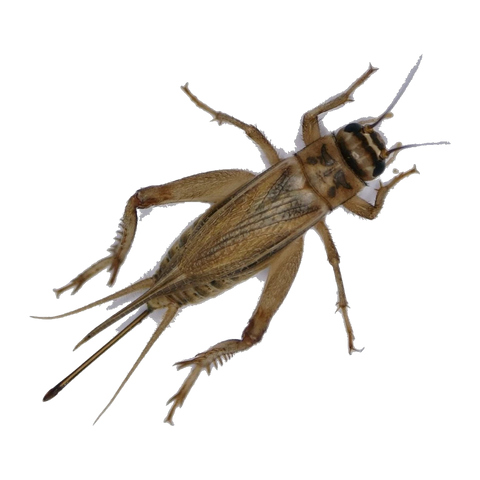
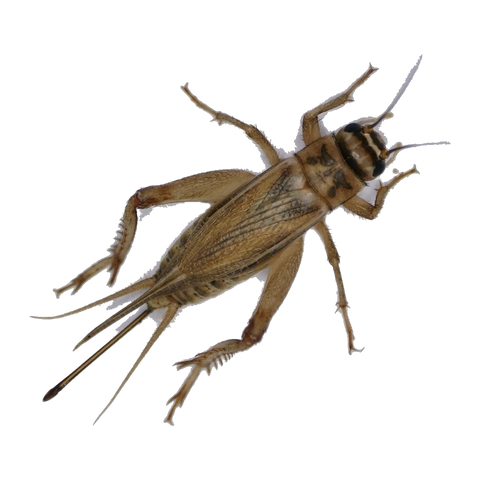
Large Crickets

Species
Cricket
Size grade
Large
Calcium : phosphorus
About 0.17:1 (calcium-poor, always dust)
Large Crickets
The working staple for a full-grown insectivore.
Large crickets are supplied live and sized for adult and sub-adult animals – bearded dragons, water dragons, larger skinks, big geckos and adult frogs. This is the grade most keepers settle on once an animal stops growing and starts eating for maintenance rather than for growth.
Which size do I need?
The rule keepers use is that a feeder should be no wider than the space between the animal's eyes. Width is what matters, not length.
Most adult dragons and monitors clear that bar easily with large crickets. The mistake at this end of the range is the opposite of the hatchling problem: an adult offered crickets that are too small will work hard for very little return, and keepers compensate by feeding far too many.
A general guide to the grades keepers use:
| Grade | Typically suits |
|---|---|
| Pinhead | Newly hatched geckos, froglets, dart frogs |
| Extra small | Hatchling and young juvenile geckos, dragons, skinks |
| Small | Growing juveniles |
| Medium | Sub-adults and small adults |
| Large | Adult dragons, water dragons, larger skinks and frogs |
How many do I need?
Adults are fed far less often than juveniles – commonly every second or third day rather than daily, and an adult bearded dragon should be taking a majority of its diet as greens and vegetables rather than insects.
Buy about a week's worth. Over-ordering is the most common mistake at this grade, because adult animals eat less often than new keepers expect and the surplus dies in the tub.
Nutrition
Crickets are calcium-poor and phosphorus-rich. A published analysis of feeder black field crickets (Gryllus bimaculatus) measured calcium at 1.4 g/kg of dry matter against phosphorus at 8.5 g/kg – a ratio of about 0.17:1, where insectivores need closer to 2:1 the other way.
An adult is not exempt. Metabolic bone disease is most visible in growing animals, but a mature female producing eggs draws heavily on her own skeleton, and years of undusted feeders show up eventually.
Gut-loading and dusting
Do both. In the same study gut-loading lifted the ratio only to around 0.4:1, still short of what an insectivore needs, and the crickets started losing that calcium as soon as the gut-load was taken away.
Gut-load for 24 to 48 hours, dust with calcium immediately before offering, and feed promptly. Use calcium with D3 where the animal has no UVB; where good UVB is provided, plain calcium is usually the better choice, since D3 can be over-supplied.
Keeping them alive at home
Keep them in a tall, ventilated container at room temperature, out of direct sun, with egg carton for surface area. Large crickets are strong jumpers and climbers, so a smooth-sided tub with a secure lid saves a lot of trouble.
Provide a gut-load block or fresh vegetable rather than an open water dish. Remove dead crickets daily – they foul a tub quickly at this size.
Suitable for, and not suitable for
Suitable for adult and sub-adult bearded dragons, water dragons, blue-tongue skinks, larger geckos, adult frogs and insectivorous birds.
Not suitable for hatchlings or small juveniles – drop back to small or extra small crickets. Not suitable as a sole diet for omnivorous species such as bearded dragons and blue-tongues, which need plant matter as well.
Safety and welfare
Large crickets bite, and a basking reptile that has gone torpid overnight will not move away from one. Remove every uneaten cricket before lights out; chewed toes and damaged eyes on sleeping lizards are almost always caused by crickets left in overnight.
Adult crickets are loud. Keep the container somewhere the noise will not matter, and wash hands after handling.
Goes well with
- Exo Terra Calcium + D3 Powder – the dusting step that makes crickets safe to feed.
- Zoo Med Cricket Block – gut-load and moisture in one, with no drowning risk.
- Zoo Med Stainless Steel Feeding Tongs – keeps fingers out of an adult animal's feeding response.
Live arrival and delivery
Live feeders are supplied for in-store collection or local delivery, with our live arrival guarantee.
Bulk quantities
Bulk counts are order in only and are not held in store. Place your bulk order by Monday for arrival on Wednesday.
Bulk orders are for in-store pickup only and cannot be posted or delivered.
Common questions
How often should I feed an adult bearded dragon crickets?
Most adult bearded dragons are fed insects every second or third day, with greens and vegetables making up the majority of the diet. Juveniles are fed insects daily; adults fed at that rate commonly become overweight.
Do adult reptiles still need their crickets dusted?
Yes. Crickets remain calcium-poor at every size, with a published calcium-to-phosphorus ratio near 0.17:1, and breeding females in particular draw on skeletal calcium if it is not supplied in the diet.
Can I leave crickets in the enclosure overnight?
No. Crickets will bite a sleeping or torpid reptile, causing damage to toes, tail tip and eyes. Remove all uneaten crickets before lights out.
My adult lizard ignores large crickets. What now?
Check the animal is warm enough to digest, since a cold reptile will not feed. If it is feeding but struggling with the size, drop back a grade to medium crickets and reassess against the eye-width rule.