Pinhead Crickets


Species
Cricket
Size grade
Pinhead (newly hatched)
Calcium : phosphorus
About 0.17:1 (calcium-poor — always dust)
Pinhead Crickets
The first feeder for an animal that has only just started eating.
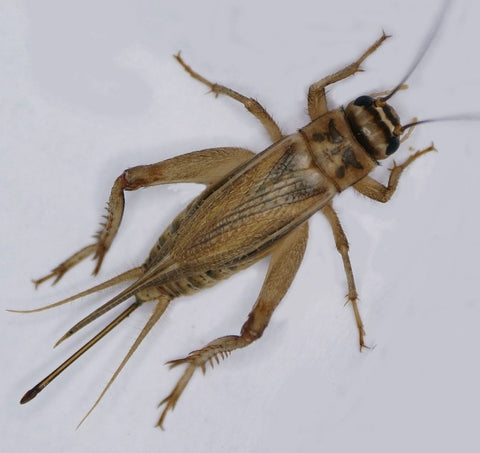
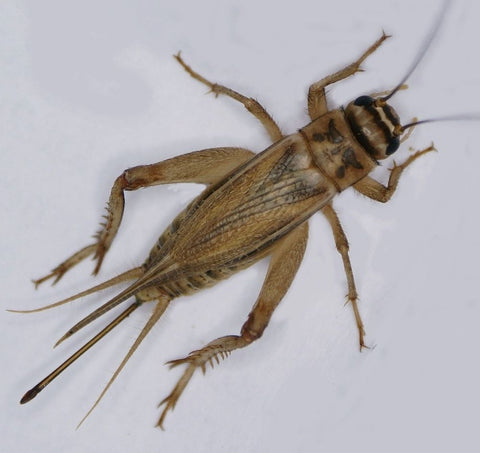
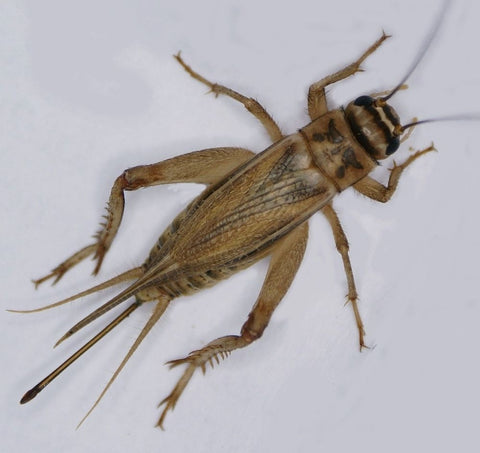
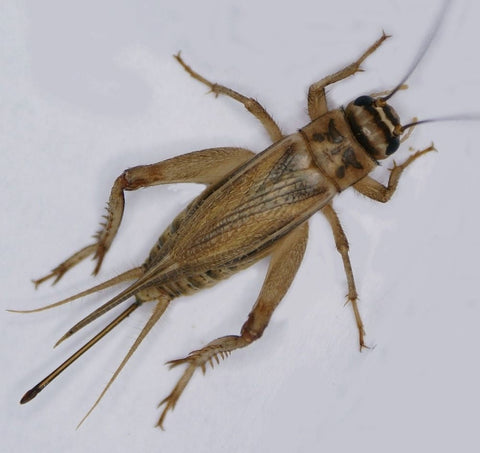
Pinhead crickets are newly hatched crickets, supplied live, and they are the smallest grade we stock. They exist for one job: feeding animals whose mouths are too small for anything else — newly hatched geckos, froglets, dart frogs, hatchling skinks and small mantids. If your hatchling is striking at extra small crickets and missing, this is the grade to drop back to.
Which size do I need?
The rule keepers use is that a feeder should be no wider than the space between the animal's eyes. Width is what decides safety, not length.
On a newly hatched gecko or a dart frog that gap is only millimetres, which rules out every grade above this one. A feeder too wide risks choking and impaction in an animal this small.
| Grade | Typically suits |
|---|---|
| Pinhead | Newly hatched geckos, froglets, dart frogs |
| Extra small | Hatchling and young juvenile geckos, dragons, skinks |
| Small | Growing juveniles |
| Medium | Sub-adults and small adults |
| Large | Adult dragons, water dragons, larger skinks and frogs |
Move up to extra small crickets as soon as your animal takes these easily.
How many do I need?
Buy a few days' worth, not a fortnight's. Pinheads grow out of the grade within about a week at room temperature, so an over-order becomes small crickets before you have used it.
Hatchlings are usually fed daily, sometimes twice. Offer what the animal takes in ten minutes, then remove the rest.
Nutrition
Crickets are calcium-poor and phosphorus-rich, and that imbalance is the direct cause of metabolic bone disease in captive reptiles. A published analysis of feeder black field crickets (Gryllus bimaculatus) measured calcium at 1.4 g/kg of dry matter against phosphorus at 8.5 g/kg — a ratio of about 0.17:1, where insectivores need closer to 2:1 the other way.
That deficit does the most damage here. A hatchling is laying down skeleton faster than at any other point in its life.
Gut-loading and dusting
Dusting does the real work at this grade. In the same study, gut-loading lifted the ratio only to about 0.4:1, and all of that accumulated calcium was lost within 24 hours of the calcium-rich food being taken away.
Dust immediately before offering and feed straight away. Use a light coating — heavily powdered pinheads are often refused by small animals. Choose calcium with D3 where the animal has no UVB, and plain calcium where good UVB is provided.
Keeping them alive at home
Keep them in a ventilated container at room temperature, out of direct sun, with egg carton for surface area. Check the lid: pinheads walk straight through ventilation slots sized for adult crickets, so fine mesh or fabric is worth the trouble.
Never offer an open water dish — crickets this small drown in a droplet. Use a gut-load block or a slice of vegetable for moisture instead.
Suitable for, and not suitable for
Suitable for newly hatched geckos, froglets, dart frogs, hatchling skinks, small mantids and insectivorous fish fry.
Not suitable for juveniles or adults, which burn more energy chasing a pinhead than they gain from eating it. Not suitable as a sole diet, and not suitable fed undusted to any growing animal.
Safety and welfare
Pinheads are the one cricket grade too small to injure a reptile, which is part of why they suit hatchlings. The risk here is escape rather than bites — loose pinheads grow into crickets that do bite.
Remove uneaten feeders at the end of the day, keep the tub closed, and wash hands after handling.
Goes well with
- Exo Terra Calcium + D3 Powder — the dusting step that makes crickets safe to feed.
- Zoo Med Cricket Block — moisture and gut-load with no drowning risk.
- Extra Small Crickets — the next grade up, for when your hatchling outgrows these.
Live arrival and delivery
Live feeders are supplied for in-store collection or local delivery, with our live arrival guarantee.
Bulk quantities
Bulk counts are order in only and are not held in store. Place your bulk order by Monday for arrival on Wednesday.
Bulk orders are for in-store pickup only and cannot be posted or delivered.
Common questions
What is a pinhead cricket?
A pinhead is a newly hatched cricket and the smallest feeder grade sold. It is used for animals whose mouths are too small to take any larger insect, such as newly hatched geckos, froglets and dart frogs.
How long do pinhead crickets stay pinhead size?
Roughly a week at normal room temperature, after which they grow into the extra small grade. Order only a few days' supply at a time rather than stockpiling.
Do pinhead crickets still need dusting with calcium?
Yes. Crickets have a published calcium-to-phosphorus ratio near 0.17:1, and hatchlings are growing bone faster than at any later stage, so undusted feeders cost a young animal the most.
Can I gut-load crickets this small?
Only to a limited extent. Published work found gut-loading raised the calcium-to-phosphorus ratio of feeder crickets only to about 0.4:1, and the calcium was lost again within 24 hours, so dusting immediately before feeding matters more.