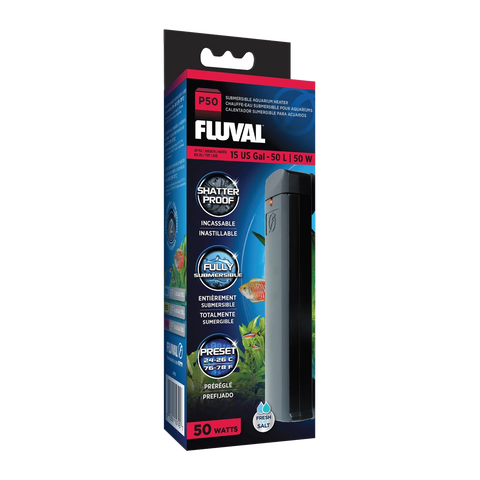
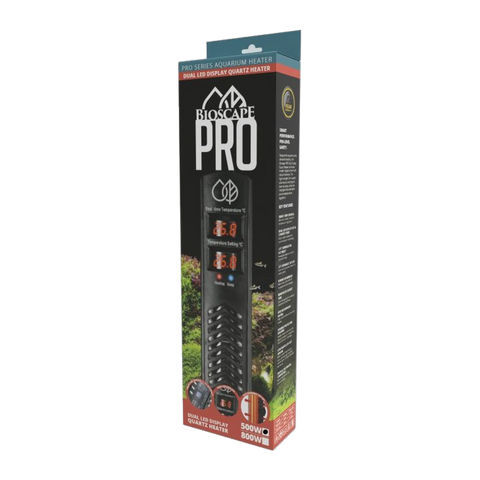
Bioscape Tropic Aquarium Heater


Wattage
100 W
Suits tanks
100–200 L
Thermostat
Adjustable dial
Water type
Freshwater + Marine
Warranty
3 years
Voltage
230–240 V AC, 50 Hz (AU mains)
Wattage
55 W
Suits tanks
50–100 L
Thermostat
Adjustable dial
Water type
Freshwater + Marine
Warranty
3 years
Voltage
230–240 V AC, 50 Hz (AU mains)
Wattage
200 W
Suits tanks
200–300 L
Thermostat
Adjustable dial
Water type
Freshwater + Marine
Warranty
3 years
Voltage
230–240 V AC, 50 Hz (AU mains)
Wattage
300 W
Suits tanks
300–400 L
Thermostat
Adjustable dial
Water type
Freshwater + Marine
Warranty
3 years
Voltage
230–240 V AC, 50 Hz (AU mains)
Wattage
25 W
Suits tanks
5–50 L
Thermostat
Adjustable dial
Water type
Freshwater + Marine
Warranty
3 years
Voltage
230–240 V AC, 50 Hz (AU mains)
Bioscape Tropic Aquarium Heater
An adjustable heater sized to your tank, not a fixed number pretending to fit everything. The Bioscape Tropic Aquarium Heater is a fully automatic, submersible glass heater sold in five wattages – 25 W, 55 W, 100 W, 200 W and 300 W – so you can match the heater to your tank volume rather than running an undersized unit flat out or an oversized one short-cycling. Every size holds its set temperature automatically, includes a bonus thermometer, and is backed by Bioscape's 3-year replacement warranty.
Key features
- Five wattages, one design – 25 W, 55 W, 100 W, 200 W and 300 W, with the 55 W and up sized to tanks from 50 L to 400 L.
- Fully automatic thermostat – set the dial once and the heater maintains that temperature on its own, cutting in and out as needed.
- 22–34°C adjustable range – covers everything from cooler community setups to warm-water cichlids and bettas.
- On/off indicator light – a glance tells you whether the element is currently heating.
- Totally submersible – can be mounted vertically or horizontally, useful in shallower or heavily aquascaped tanks where a vertical heater won't fit.
- Bonus thermometer included – a simple check against the heater's own reading, which is worth doing on any heater.
- 3-year replacement warranty – well above the informal one-year standard on budget heaters.
Specifications
| Wattage | SKU | Recommended tank size | Temperature range | Orientation |
|---|---|---|---|---|
| 25 W | HT025 | Not published by Bioscape for this size | 22–34°C, adjustable | Not stated by Bioscape for this size |
| 55 W | HT50 | 50–100 L | 22–34°C, adjustable | Vertical or horizontal |
| 100 W | HT100 | 100–200 L | 22–34°C, adjustable | Vertical or horizontal |
| 200 W | HT200 | 200–300 L | 22–34°C, adjustable | Vertical or horizontal |
| 300 W | HT300 | 300–400 L | 22–34°C, adjustable | Vertical or horizontal |
All five sizes share the same thermostat, indicator light and construction – only the wattage, physical length and recommended tank size change.
Which wattage do I need?
Bioscape's stated ranges above assume a typical Australian indoor ambient and a tropical target temperature – they're a starting point, not a guarantee, because the real variable is how far your room temperature sits below your target, not just tank volume. A tank in an air-conditioned room or an unheated garage needs more heating power per litre than the same tank in a warm north-facing room. If your tank runs at the top end of a wattage's recommended range, or the room gets genuinely cold overnight, size up rather than running one heater at its limit continuously.
Heater sizing guide
| Tank volume | Recommended wattage |
|---|---|
| Nano and small tanks | 25 W (HT025). Bioscape do not publish a litre range for this size, so ask us if you are unsure. |
| Up to 100 L | 55 W (HT50) |
| 100–200 L | 100 W (HT100) |
| 200–300 L | 200 W (HT200) |
| 300–400 L | 300 W (HT300) |
For anything over 400 L, or a cold-room installation at any volume, run two heaters rather than one oversized unit – it splits the load, and gives you a working heater if one fails.
Setup and use
Fully submerge the heater to at least its marked minimum depth, angled or horizontal in shallow tanks, before switching it on – running any glass heater exposed to air will crack the glass. Let it sit at tank temperature for a few minutes before powering up, and don't handle or remove it while it's hot; going straight from hot glass into cooler water or air is the other common way these fail. Set the dial to your target temperature and use the bonus thermometer over the first day or two to confirm the tank is actually settling where you set it, since dial markings are a guide rather than a lab-accurate scale.
Suitable for, and not suitable for
Suitable for freshwater and marine aquariums needing supplementary heating – tropical community tanks, cichlid tanks, bettas and reef or FOWLR systems. Not a substitute for a separate controller in setups where you need tighter-than-thermostat temperature accuracy or a fail-safe against a stuck-on heater; a dedicated aquarium controller with a temperature probe adds that layer if your livestock can't tolerate a thermostat fault.
What's included
The heater unit and a bonus thermometer. It does not include a mount beyond the suction cups fitted to the unit, a protective guard, or a separate controller.
Care and maintenance
Wipe down any algae or mineral build-up on the glass body periodically so heat transfers efficiently to the water rather than insulating against it. Check the suction mounts every few weeks – a heater that's slipped to rest against the glass or substrate can create a hot spot or, in shallow tanks, come partly out of the water.
Running costs
Actual running cost depends on how far below your target temperature the room sits and how well insulated the tank is – a heater's wattage is its maximum draw, not its average, since the thermostat cycles it on and off once the tank is at temperature. Bioscape doesn't publish a duty-cycle or annual kWh figure for this range, so we can't give a reliable per-tank dollar estimate here; as a rough frame of reference, a heater cycling at roughly a third duty in a stable Australian indoor tropical setup would draw noticeably less than its full wattage run continuously.
Safety
Mains-powered and fully submersible – never operate the heater out of water, even briefly, and always switch off and allow it to cool before removing it for maintenance or a water change. Use on a circuit protected by an RCD/safety switch, standard practice for anything submersible and mains-powered in an aquarium.
Warranty and delivery
Backed by Bioscape's 3-year replacement warranty, in addition to your rights under Australian Consumer Law.
Common questions
Can I mount it horizontally in a shallow tank?
Yes – the 55 W, 100 W, 200 W and 300 W are rated for vertical or horizontal mounting, provided the unit stays fully submerged to its marked minimum depth. Bioscape don't state an orientation for the 25 W, so keep that size vertical unless they say otherwise.
What temperature should I set it to?
That depends on what you're keeping – most tropical community fish sit around 24–26°C, while some cichlids and bettas prefer closer to 27–28°C. The heater's adjustable range covers 22–34°C, so check the needs of your specific fish rather than using one number for every tank.
My tank sits right on the edge of two wattages – which do I pick?
Go with the larger wattage if your room runs cool or the tank is in a draughty spot, and the smaller one if the room stays warm – an undersized heater running flat out ages faster than one with some headroom.
Do I need a separate controller as well?
Not for typical community fishkeeping – the built-in thermostat is fully automatic. For sensitive livestock or a setup where a stuck-on heater would be a serious problem, a separate controller with its own temperature probe adds a safety layer this heater doesn't have on its own.
Is the thermometer that comes with it accurate enough to rely on?
Treat it as a useful cross-check rather than a lab-grade reading – compare it against the heater's own dial setting over the first few days, and if the two disagree by more than a degree or so, trust the thermometer and adjust the dial.