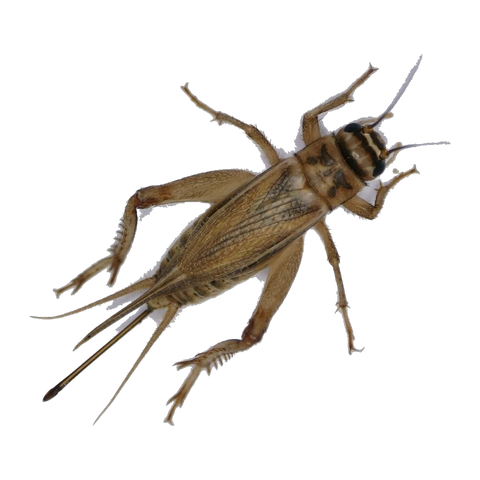
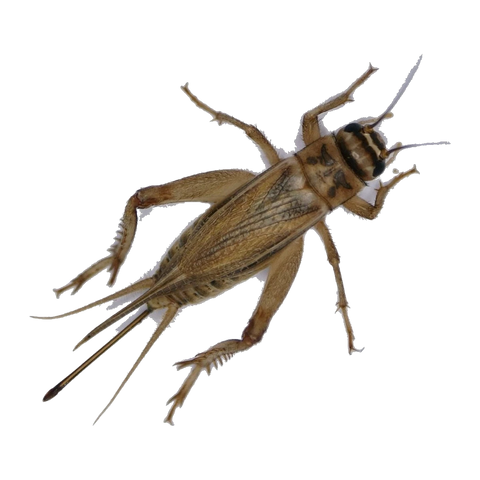
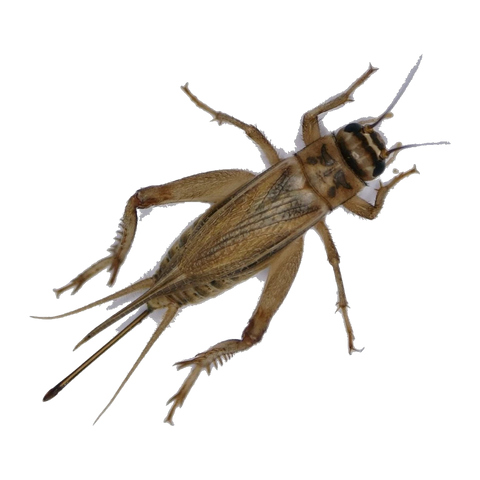
Small Crickets

Species
Cricket
Size grade
Small
Calcium : phosphorus
About 0.17:1 (calcium-poor, always dust)
Species
Cricket
Size grade
Small
Calcium : phosphorus
About 0.17:1 (calcium-poor, always dust)
Pack size
Pack of 250
Species
Cricket
Size grade
Small
Calcium : phosphorus
About 0.17:1 (calcium-poor, always dust)
Pack size
Pack of 500
Species
Cricket
Size grade
Small
Calcium : phosphorus
About 0.17:1 (calcium-poor, always dust)
Pack size
Pack of 1000
Small Crickets
The grade a growing juvenile spends most of its first year on.
Small crickets are supplied live and sized for juveniles that have outgrown hatchling feeders but are not yet eating adult prey – young leopard and crested geckos, juvenile bearded dragons, growing skinks and adult dart frogs. This is the workhorse grade: most keepers buy more small crickets over an animal's life than any other size.
Which size do I need?
The rule keepers use is that a feeder should be no wider than the space between the animal's eyes. Width is what decides safety, not length.
Juveniles are the stage where that gap changes fastest, so re-check it every few weeks rather than settling on a grade and forgetting about it. An animal that has visibly outgrown small crickets is being underfed even when the tub looks emptied.
| Grade | Typically suits |
|---|---|
| Pinhead | Newly hatched geckos, froglets, dart frogs |
| Extra small | Hatchling and young juvenile geckos, dragons, skinks |
| Small | Growing juveniles |
| Medium | Sub-adults and small adults |
| Large | Adult dragons, water dragons, larger skinks and frogs |
Step down to extra small crickets if your animal is missing strikes, or up to medium crickets once these are taken easily.
How many do I need?
Juveniles are typically fed daily, and a growing lizard eats a surprising number at this grade – more than the same animal will as an adult.
Even so, buy about a week's worth. Crickets are short-lived and tub losses climb sharply beyond that, which is where most of the cost in feeding a juvenile actually goes.
Nutrition
Crickets are calcium-poor and phosphorus-rich, and that imbalance is the direct cause of metabolic bone disease in captive reptiles. A published analysis of feeder black field crickets (Gryllus bimaculatus) measured calcium at 1.4 g/kg of dry matter against phosphorus at 8.5 g/kg – a ratio of about 0.17:1, where insectivores need closer to 2:1 in favour of calcium.
Because this grade is fed for months on end, small crickets are where a lazy dusting routine causes the most cumulative harm. Bent limbs and a rubbery jaw in a juvenile are usually the result of consistency, not a single missed feed.
Gut-loading and dusting
Do both. In the same study, gut-loading lifted the ratio only to about 0.4:1 – still well short – and the crickets shed that calcium within 24 hours of the calcium-rich food being removed.
Gut-load for 24 to 48 hours, dust immediately before offering, and feed promptly. Use calcium with D3 where the animal has no UVB; where good UVB is provided, plain calcium is usually the better choice.
Keeping them alive at home
Keep them in a ventilated container at room temperature, out of direct sun, with egg carton for surface area. At this size crickets begin to jump properly, so a deep tub with a secure lid saves chasing them around the laundry.
Offer a gut-load block or fresh vegetable rather than an open water dish. Remove dead crickets daily – a fouled tub kills the rest faster than crowding does.
Suitable for, and not suitable for
Suitable for juvenile leopard and crested geckos, young bearded dragons, growing skinks and water dragons, adult dart frogs and small insectivorous birds.
Not suitable for newly hatched animals – drop back to pinhead or extra small. Not suitable as a sole diet for omnivores such as bearded dragons, which need greens alongside insects even as juveniles.
Safety and welfare
Crickets at this size will bite a sleeping or torpid reptile. Remove every uneaten cricket before lights out; damaged toes and tail tips on juveniles are almost always caused by crickets left in overnight.
Keep the tub closed and wash hands after handling feeders.
Goes well with
- Exo Terra Calcium + D3 Powder – the dusting step that makes crickets safe to feed.
- Zoo Med Cricket Block – gut-load and moisture in one, with no drowning risk.
- Black Soldier Fly Larvae 100g – a calcium-positive feeder worth rotating against crickets.
Live arrival and delivery
Live feeders are supplied for in-store collection or local delivery, with our live arrival guarantee.
Bulk quantities
Bulk counts are order in only and are not held in store. Place your bulk order by Monday for arrival on Wednesday.
Bulk orders are for in-store pickup only and cannot be posted or delivered.
Common questions
What size crickets does a juvenile bearded dragon need?
Most growing juveniles take small crickets, moving up to medium as they mature. Check the feeder is no wider than the space between the animal's eyes and re-check every few weeks, because juveniles change size quickly.
How often should juveniles be fed?
Most juvenile insectivores are fed daily, offering what the animal takes in ten to fifteen minutes. Adults of the same species are usually fed every second or third day instead.
Is gut-loading enough on its own?
No. Published work on feeder crickets found gut-loading raised the calcium-to-phosphorus ratio only to about 0.4:1, short of the roughly 2:1 insectivores need, and the calcium was lost again once the gut-load was removed.
When should I move up to medium crickets?
Move up once small crickets are taken easily and the gap between your animal's eyes is clearly wider than the cricket. Feeding a grade that is too small means the animal works harder for less, and keepers compensate by overfeeding.